ORIGINAL ARTICLE
https://doi.org/10.47811/bhj.213
Case-based learning versus Lecture for Teaching Management of Suspected Rabid Animal Exposure to Interns in an Infectious Diseases Hospital of Kolkata - A Randomized Controlled Trial
Ankita Mishra1, Baisakhi Maji2, Vineeta Shukla3, Nabanita Bhattacharyya4
1Department of Community Medicine, Hi-Tech Medical College and Hospital, Bhubaneswar, Odisha, India
2Department of Community Medicine, Infectious Diseases and Beliaghata General Hospital, Kolkata, West Bengal, India
3Department of Community Medicine, Prasad Institute of Medical Sciences, Lucknow, Uttar Pradesh, India
4Infectious Diseases and Beliaghata General Hospital, Kolkata, West Bengal, India
Corresponding author:
Dr Ankita Mishra
22ankita1992@gmail.com
ABSTRACT
Introduction: Despite national programs and guidelines, medical students often fail to apply rabies management knowledge during internships, likely due to traditional teaching methods, despite the effectiveness of case-based learning. This study compared the effectiveness of case-based learning (CBL) and lectures for teaching rabies management to medical interns. Methods: A randomized educational intervention study was conducted from July to September 2024 at a tertiary care hospital in Kolkata, involving MBBS interns. Among all interns posted in a month, 64 were randomly assigned to Group A (lecture) or Group B (CBL) using block randomization. Baseline knowledge was assessed via pre-test e-questionnaire, followed by lectures or CBL, with post-test assessments immediately and one month later, and feedback collected via e-feedback form. Data were analyzed using appropriate statistical software, with significance at P < 0.05, and perceptions were thematically presented. Results: Initially, each group had 32 interns, but only 27 in Group A and 28 in Group B completed both the post-tests. Both groups showed significant improvements in post-test and post 1-month scores compared to pre-test scores. Group B had significantly higher post-test total and management scores. No notable differences in satisfaction scores were found between groups. Group A desired more one-on-one interactions and clinical scenarios, while Group B enjoyed group activities. Conclusions: Students taught with CBL scored higher in post-test and management assessments, retained rabies knowledge better after a month, with similar satisfaction levels across groups. Group A wanted more one-on-one interaction and clinical case scenarios, whereas Group B valued group activities.
Keywords: case-based learning; internship and residency; lecture-based learning; medical education; rabies
INTRODUCTION
Rabies, a neglected tropical disease, causes nearly 70,000 deaths/year globally, with India accounting for 36%1-3. Despite ongoing programs, mortality remains high due to stray dogs, poor awareness, limited treatment access, and weak health systems3-9.
Medical interns, providing first-line care to animal bite victims, often lack adequate knowledge of post-exposure prophylaxis and immunoglobulin, emphasising the need for stronger training10-13.
The National Medical Council recommends interactive sessions alongside lectures for teaching communicable disease management, yet most colleges rely solely on lectures14,15. Case-based learning, engages students in analyzing real or simulated cases to build critical thinking, but remains underutilized16-21.
Till date, no interventional study has compared case-based discussion with lectures in this context. Hence, this study aimed to compare the effectiveness of case-based learning and lecture-based teaching for imparting knowledge on management of suspected rabid animal exposure to medical interns; and to explore the perceptions of these interns regarding the two learning modalities.
METHODS
Patient and public involvement: The participants were not involved in designing or conducting the trial.
Trial design, settings, participants: A randomized educational intervention study, parallel in design with an allocation ratio of 1:1 was conducted on medical interns posted in Infectious Diseases & Beliaghata General (ID & BG) Hospital, Kolkata (which has Model Anti-Rabies Clinic and Regional Rabies Diagnostic Laboratory) from July to September, 2024. These students were only posted once in this hospital during their rotary internship of 1 year.
Eligibility criteria: MBBS Graduates with provisional registration under any medical council in India and working proficiency in English were included, while those who did not give an electronic informed consent, who had attended a formal rabies training or had worked in a rabies clinic before the trial were excluded.
Intervention and comparator: The intervention was given on the first day of posting in 2 sessions, lecture in the morning session and CBL in the post-lunch session. Initially, pre-test knowledge assessment e-questionnaire was administered to the participants before imparting the module-based instructions. Instructions on rabies were provided to the participants in the 2 groups by the same facilitator (MD Community Medicine, currently posted at the institute) to ensure consistency in subject expertise and content delivery. The sessions were conducted with the help of either lecture module or CBL module to prevent performance bias. The teaching-learning session were followed by assessment of the students using the post-test knowledge assessment e-questionnaire. This was followed by feedback on the sessions from the participants. After a wash out period of 1 month, the knowledge assessment forms were administered again to check for retention. Lecture and CBL sessions were conducted separately, and participants were instructed not to discuss session content until completion of the follow-up assessment. Moreover, the one‑month follow-up reassessment was done to reduce immediate recall and casual sharing of details. After comparison of the knowledge, the group with deficient knowledge were taught using the modality found to have better retention.
The exposure variable/intervention given to Group A was a lecture on rabies for a duration of 2 hours, covering epidemiology, clinical features, diagnosis, and management. The lecture was delivered using Microsoft PowerPoint 2019 (Microsoft Corporation, Redmond, WA, USA), with a total of 64 slides on the topic. Other tools used included a laptop, projector with screen, pointer, and a microphone. Question-answer interaction was permitted throughout the session to encourage clarification and engagement. A structured lesson plan was followed to ensure uniformity of content delivery.
The intervention given to Group B was a case‑based small group discussion conducted for 2 hours, with 8-10 students in each group. A total of six clinical scenarios were used, covering diverse rabies‑related exposures:
Case 1: Child with hydrophobia following incomplete ARV regimen after a stray dog bite.
Case 2: Neonate with multiple rat bites and severe facial injuries.
Case 3: Veterinary technician with cat scratch and uncertain pre‑exposure prophylaxis documentation.
Case 4: Child bitten by a vaccinated pet dog with prior ARV completion but new unprovoked bite.
Case 5: Adult with mixed ARV regimens and missed doses.
Case 6: Immunocompromised patient on chemotherapy presenting with monkey scratch.
These case scenarios were presented to the interns using Microsoft PowerPoint 2019 (Microsoft Corporation, Redmond, WA, USA). Other tools needed were laptop, projector, pointer, whiteboard with marker, microphone, chart papers and pens. The facilitator's role was to guide the discussion, ensure accuracy of exposure classification, and highlight correct steps for management. Structured triggers in the form of questions were provided after each case. Students were encouraged to analyse the scenario with their group mates and write the answers to the questions on a chart paper. After analysis, 1 representative from each group on rotation basis was invited to debate each scenario in front of other groups. There was an inter-group discussion along with doubt clearing by the facilitator. This was followed by a summary of key learning points, which were mentioned on a whiteboard.
Outcomes: The Primary outcome variable for both the groups was knowledge score (on epidemiology, clinical features, diagnosis and management) which was assessed pre-intervention, immediately post-intervention and 1-month post-intervention. The total knowledge score ranged from 0 to 15, allocated as follows: 4 points for epidemiology, 3 points for clinical features, 3 points for diagnosis, and 5 points for management. The secondary outcome was satisfaction score (based on rating of the class, helpfulness in answering common questions and confidence in dealing with such cases) which was evaluated immediately after the intervention. Each component of the satisfaction score was rated on a 5-point Likert scale, with "1" indicating the most negative response and "5" indicating the most positive response. The total satisfaction score was determined by summing the scores of each component. Consequently, the maximum possible satisfaction score was 15, and the minimum was 3. Student feedback on the implemented learning modality was also collected.
Harms: The intervention was not associated with any harm.
Sample size estimation
The formula22 [{Z(1-α/2) + Z(1-β)}2. (2σ2)]/[( μ 1- μ 2)2] was used for sample size (n) estimation. Here Z1-α/2=1.96 at an α/2 of 0.05; Z1-β=0.84 at a β of 0.20; σ2 is the variance of the reference population; μ 1 (=40.82) and μ 2 (=37.39) are the mean elementary knowledge scores obtained by Medical Oncology post-graduate students after attending case-based learning and lecture as given in the study by Bi et al.20 This study was used as it was the closest available published study providing comparative mean knowledge scores for case based versus lecture based teaching in a medical education context. The value of σ2 was calculated as [{(N1-1) σ12 + (N2-1) σ22}/{N1+ N2-2}], where N1 and N2 were the sample sizes of the 2 groups (taken as 40 each from the reference study20), σ1 (=4.39) and σ2 (=4.54) are the standard deviations in elementary knowledge scores of students attending case-based learning session and those attending lecture, respectively. The minimum sample size required in each arm was 27. Although CBL was delivered in small groups, the primary unit of analysis was the individual student's knowledge score. Hence, design effect was not applied in the initial calculation. Considering a non-response rate of 20%, the final sample size was calculated as 32 in each arm.
Randomization
Every month, 200 interns are posted at the institute. Predefined inclusion and exclusion criteria were applied. Every eligible intern was assigned a unique number.
Sequence generation: As the required sample size for both arms was 32, the total number of participants required for the study is 64. These interns were selected using a computer-generated randomization sequence (employing Microsoft Excel 2019) by an independent statistician to ensure impartiality.
Allocation: The interns were then randomly allocated in a 1:1 ratio to either Group A (lecture) or Group B (case-based learning). To ensure equal group sizes, block randomization was employed with a block size of 4, which would recruit 2 participants in each group during allocation. Allocation concealment was done using sealed opaque envelope. Each assignment was placed in sequentially numbered, opaque, sealed envelopes prepared by someone independent of recruitment. The envelope was opened only after the intern was enrolled.
Blinding
Participant and facilitator blinding were not feasible due to the educational nature of the intervention. However, the independent evaluator conducting outcome assessment was blinded to group assignment. Specifically, the evaluator's role was to administer the e‑questionnaire uniformly to all participants, to compile responses and to export anonymized data for analysis, with group codes revealed only after scoring was complete.
Additionally, comprehensive contact records were maintained, with regular follow-ups to limit attrition.
Study tools and technique
The baseline knowledge of the participants was assessed by a self-administered pre-test knowledge assessment e-questionnaire [4 sections (15 items) - Section I (Epidemiology): 4 items; Section II (Clinical features): 3 items; Section III (Diagnosis): 3 items; Section IV (Management): 5 items]. The questions were developed by the team of researchers based on national rabies management guidelines. After preparation, the contents were validated by a panel of three experts, i.e. 2 from Community Medicine and 1 from Infectious Diseases (CVI 0.76). Prior to the main study, the tool was pre‑tested among 30 interns not included in the final sample, as the questions were clearly understood by them, no modifications were made. Internal consistency of the tool was assessed and was found to have an acceptable reliability (Cronbach's alpha 0.75).
The satisfaction scale had 3 items which were answered on a 5-point Likert. These questions were also self-administered using an e-questionnaire for collection of feedback.The questions were developed by the team of researchers to evaluate the satisfaction of students with the learning session. Content validation was done by a panel of three experts, i.e. 1 from Community Medicine, 1 from Infectious Diseases and 1 from Psychiatry (CVI 0.72). After content validation the tool was pre‑tested on 30 interns who were excluded from the final sample. This was followed by assessment of internal consistency. The tool was found to have an acceptable reliability (Cronbach's alpha 0.78).
Knowledge was imparted through a lecture module or a case-based learning (CBL) module (including epidemiology, clinical features, diagnosis and management) using white board with marker pen, chart papers, projector with pointer, laptop and microphone. Post-learning session, knowledge was reassessed by a self-administered post-test knowledge assessment e-questionnaire and feedback was taken from the interns through an e-feedback form. The participants' knowledge was reassessed after 1 month using a self-administered post-test knowledge assessment e-questionnaire.
Ethical considerations
Data collection was initiated after approval from the institutional ethics committee (IDBGH/IEC/2664, Dated - 24.06.24). The facilitator and the participating interns maintained an independent academic relationship, without any direct supervisory influence. In addition, informed electronic consents were taken from participants after ensuring them that their participation was entirely voluntary and that their involvement in the study would have no bearing on their academic or professional evaluations.
Data management and statistical analysis
The data were collected and entered into Microsoft Office Excel 2016 (Microsoft Corp, Redmond, WA, USA) and analyzed using Statistical Package for the Social Sciences Version 25.0 (IBM, New York City, USA). A per protocol analysis was implemented to ensure the integrity of the findings. Statistical tests were done to check for normality (Kolmogorov-Smirnow p-value <0.05 and Shapiro-Wilk test p-value <0.05). Mann Whitney U test and independent samples median test were employed to compare the median and distribution of the two groups, respectively. Wilcoxon matched pair signed rank test was used for comparison of pre-test, post-test and post 1-month test scores within the groups. A p value of <0.05 was considered significant. The perceptions of the participants regarding lecture and CBL were presented thematically.
RESULTS
Figure 1 depicts the flow of participants in the study. At the start of the study, each group had 32 interns. All these participants had completed the immediate post-test. However, only 27 interns in Group A (15.6% attrition) and 28 in Group B (12.5% attrition) completed the post-test, leading to a final analysis of 55 participants . The 5 drop-outs from Group A and 4 drop-outs from Group B did not complete the post 1‑month test even after multiple attempts, and therefore no post 1-month outcome data were available for them. As the minimum sample required in each group was 27, and complete data for 27 interns in Group A and 28 interns in Group B were available at the end of the study, we did not include the drop-outs in the analysis. Their inclusion in the analysis would have necessitated imputation of missing values, which could have influenced the results.
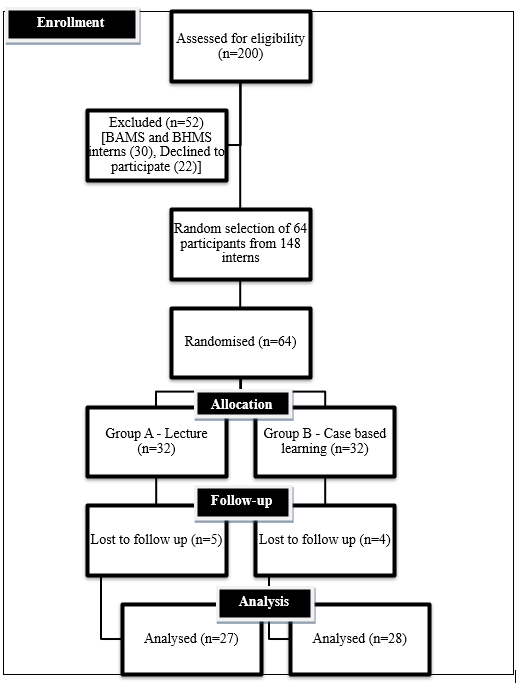
Figure 1: Participant flow.
The median age (IQR) was 24 years (23-25) in both groups, with no significant difference (Independent samples median test, P = 0.221). Age distribution was also similar (Mann-Whitney U test, P = 0.093). Group A had 18 males, while Group B had 17 (Fisher's exact test, P = 0.781). Thus, there was no difference in the age and gender distribution of participants in both the groups.
Baseline performance was assessed across five domains - total score (15), epidemiology (4), clinical features (3), diagnosis (3), and management (5). For the total score, Group A achieved a median of 8 (IQR: 7-11) while Group B had a median of 7 (IQR: 6-10); Independent Samples Median Test yielded a P -value of 0.895 and Mann-Whitney U Test a P -value of 0.228, indicating no statistical difference between the groups. In the epidemiology domain, both groups had a median score of 3, Group A with an IQR of 2-4 and Group B with an IQR of 2-3, with P -values of 0.478 (Independent Samples Median Test) and 0.332 (Mann-Whitney U Test). For clinical features, both groups attained a median of 2 (IQR: 1-3 for Group A and 1-2 for Group B), with P -values of 0.702 and 0.351 from the Independent Samples Median Test and Mann-Whitney U Test, respectively. In the diagnosis domain, both groups again had a median of 2 (IQR: 1-2.5 for Group A and 1-3 for Group B), with the Independent Samples Median Test reporting a P -value of 0.934 and the Mann-Whitney U Test 0.972. Lastly, in the management domain (maximum 5), both groups achieved a median of 2, with Group A's IQR being 1- 4 and Group B's IQR 1- 3; the corresponding P -values were 0.878 (Independent Samples Median Test) and 0.270 (Mann-Whitney U Test). These results confirm that the baseline performance across all sections was statistically similar between the two groups.
Comparisons of pre-test and post-test scores within each group presented in Table 1 revealed significant improvements across all sections (total, epidemiology, clinical features, diagnosis, and management) as determined by the Wilcoxon Matched Pair Signed Rank Test (P < 0.001). Moreover, both groups demonstrated a marked enhancement in the post 1-month test scores relative to the pre-test (P < 0.01); however, no significant differences were observed between the immediate post-test and the 1-month follow-up scores in either group.
Table 1: Comparison of the pre-test, post-test and post 1-month test scores within Group A, n1 = 27 and Group B, n2 = 28.
|
|
Variable (Score) |
Group A |
Group B |
||||
|
Median (IQR) |
Wilcoxon matched pair signed rank test P value |
Median (IQR) |
Wilcoxon matched pair signed rank test P value |
||||
|
A |
Pre-test vs post-test |
||||||
|
|
|
Pre-test |
Post-test |
|
Pre-test |
Post-test |
|
|
1 |
Total (15) |
8 (7-11) |
13 (11-14) |
<0.001 |
7 (10-6) |
14 (15-13) |
<0.001 |
|
2 |
Epidemiology (4) |
3 (2-4) |
4 (4-4) |
<0.001 |
3 (3-2) |
4 (4-4) |
<0.001 |
|
3 |
Clinical features (3) |
2 (1-3) |
3 (2-3) |
<0.001 |
2 (2-1) |
3 (3-2) |
<0.001 |
|
4 |
Diagnosis (3) |
2 (2.5-1) |
3 (3-3) |
<0.001 |
2 (3-1) |
3 (3-3) |
<0.001 |
|
5 |
Management (5) |
2 (4-1) |
4 (5-2) |
<0.001 |
2 (3-1) |
5 (5-3.8) |
<0.001 |
|
B |
Pre-test vs post 1-month test |
||||||
|
|
|
Pre-test |
Post 1-month test |
|
Pre-test |
Post 1-month test |
|
|
1 |
Total (15) |
8 (11-7) |
13 (13-12) |
<0.001 |
7 (6-10) |
13 (12-14) |
<0.001 |
|
2 |
Epidemiology (4) |
3 (4-2) |
4 (4-3) |
0.002 |
3 (2-3) |
4 (3-4) |
<0.001 |
|
3 |
Clinical features (3) |
2 (3-1) |
3 (3-2.5) |
0.001 |
2 (1-2) |
3 (2-3) |
0.001 |
|
4 |
Diagnosis (3) |
2 (2.5-1) |
3 (3-3) |
<0.001 |
2 (1-3) |
3 (3-3) |
<0.001 |
|
5 |
Management (5) |
2 (4-1) |
4 (4-3) |
0.009 |
2 (1-3) |
4 (4-5) |
<0.001 |
|
C |
Post-test vs Post 1-month test |
||||||
|
|
|
Post-test |
Post 1-month test |
|
Post-test |
Post 1-month test |
|
|
1 |
Total (15) |
13 (11-14) |
13 (12-13) |
0.478 |
14 (15-13) |
13 (14-12) |
0.341 |
|
2 |
Epidemiology (4) |
4 (4-4) |
4 (3-4) |
0.26 |
4 (4-4) |
4 (4-3) |
0.564 |
|
3 |
Clinical features (3) |
3 (2-3) |
3 (2.5-3) |
0.496 |
3 (2-3) |
3 (2-3) |
0.225 |
|
4 |
Diagnosis (3) |
3 (3-3) |
3 (3-3) |
0.058 |
3 (3-3) |
3 (3-3) |
0.317 |
|
5 |
Management (5) |
4 (2-5) |
4 (3-4) |
0.815 |
5 (3.8-5) |
4 (4-5) |
0.947 |
Inter-group comparisons in Table 2 showed that Group B achieved significantly higher post-test total scores (Mann-Whitney U Test, P = 0.045) and management scores (Mann-Whitney U Test, P = 0.043) compared to Group A. In addition, the post 1-month test scores revealed significant differences in the distribution of clinical features scores (Mann-Whitney U Test, P = 0.033) and management scores (Mann-Whitney U Test, P = 0.006) between the groups.
Table 2: Comparison of the post-test and post 1-month scores of Group A, n1 = 27 and Group B, n2 = 28.
|
|
Median (IQR) |
Independent samples median test P value |
Mann-Whitney U test P value |
||
|
Group A |
Group B |
||||
|
A |
Post-test (Score) |
||||
|
1 |
Total (15) |
13 (11-14) |
14 (15-13) |
0.259 |
0.045 |
|
2 |
Epidemiology (4) |
4 (4-4) |
4 (4-4) |
- |
0.498 |
|
3 |
Clinical features (3) |
3 (2-3) |
3 (2-3) |
- |
0.926 |
|
4 |
Diagnosis (3) |
3 (3-3) |
3 (3-3) |
- |
0.238 |
|
5 |
Management (5) |
4 (2-5) |
5 (3.8-5) |
0.127 |
0.043 |
|
B |
Post 1-month test (Score) |
||||
|
1 |
Total (15) |
13 (12-13) |
13 (14-12) |
0.281 |
0.310 |
|
2 |
Epidemiology (4) |
4 (3-4) |
4 (4-3) |
- |
0.528 |
|
3 |
Clinical features (3) |
3 (2.5-3) |
3 (2-3) |
- |
0.033 |
|
4 |
Diagnosis (3) |
3 (3-3) |
3 (3-3) |
- |
0.051 |
|
5 |
Management (5) |
4 (3-4) |
4 (4-5) |
0.051 |
0.006 |
Lastly, Table 3 indicates no statistically significant difference in overall satisfaction or in any of the individual components of satisfaction between the groups. The perceptions of the participants regarding lecture and CBL, presented in Figure 2 highlights differing perspectives. While an intern in Group A noted the absence of "one-to-one interaction" in their lecture class, Group B participants praised the group activities and interaction. Some participants in Group A suggested incorporating "more clinical case scenarios" and increasing "interactions" to enhance the lecture experience.
Table 3: Comparison of the satisfaction scores of Group A, n1 = 27 and Group B, n2 = 28.
|
|
Satisfaction (score) |
Median (IQR) |
Independent samples median test P value |
Mann-Whitney U test P value |
|
|
Group A |
Group B |
||||
|
1 |
Total (1-15) |
14 (13.5-15) |
14 (13-15) |
- |
0.137 |
|
2 |
Rating of the class (1-5) |
5 (5-5) |
5 (5-5) |
- |
0.529 |
|
3 |
Helpfulness in answering common questions (1-5) |
5 (5-5) |
5 (4-5) |
0.684 |
0.653 |
|
4 |
Confidence in dealing with such cases (1-5) |
4 (4-5) |
5 (4-5) |
0.869 |
0.972 |
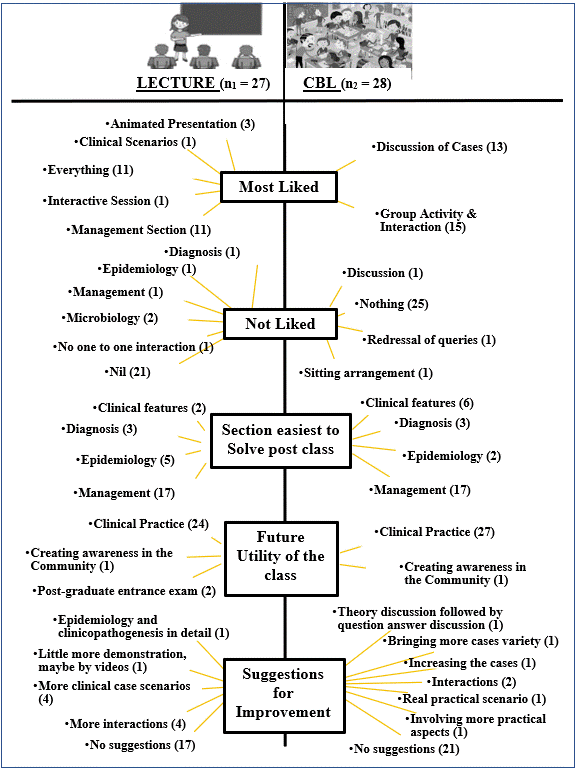
Figure 2: Perceptions of the participants regarding lecture and CBL. (n=55)
DISCUSSION
Numerous studies have demonstrated that case-based learning (CBL) is superior to traditional teaching methods. This advantage is evident in terms of both academic performance and student satisfaction. For instance, Diwan et al. (2017)19 compared these methods for teaching hyperglycemia and hypothyroidism, Bi et al. (2019)20 for teaching lung cancer and, Alhazami et al. (2020)21 for assessing orthodontic cases. Yet, to the best of our knowledge, there is barely any article comparing these methods for teaching/learning management of suspected rabid animal exposure.
In our study, we initially had 32 interns per group, but only 27 in Group A and 28 in Group B completed the post-test, showing minor attrition rates of 15.6% and 12.5%, respectively. These attrition rates are higher compared to the studies by Diwan et al. (2017)19 and Bi et al. (2019)20, who reported no loss to follow-up. Alhazami et al. (2020)21 had a minimal non-response rate of 3.1%. These differences in participant retention highlight the variability across studies and the importance of considering attrition rates in educational research. Our participants had a median age of 24 years with a male predisposition in both groups. The age and gender distribution in our study were consistent with previous studies,19-21 indicating that the observed effects are likely due to the intervention methods rather than demographic variability. This demographic consistency is essential for ensuring that the results are attributable to the teaching methods rather than other confounding factors.
Both groups in our study showed significant improvement in post-test scores across all sections, as well as in post 1-month scores. Our observations of higher post-test total and management scores, and significant differences in clinical features and management scores in the post 1-month test in the CBL group align with previous research,19-21 supporting the effectiveness of CBL in enhancing knowledge retention and clinical skills. Overall satisfaction scores did not show a significant difference between the two groups, indicating that participants receiving CBL were equally satisfied as those receiving lectures. However, qualitative feedback suggested that incorporating more clinical case scenarios and interactive elements could enhance the learning experience in lecture-based methods.
Thus, our study, along with evidence from Diwan et al. (2017)19, Bi et al. (2019)20, and Alhazami et al. (2020)21, indicates that CBL significantly enhances student engagement and learning effectiveness across various educational settings. The consistent improvement in test scores and positive feedback from participants highlight the potential benefits of integrating CBL into medical education curricula.
The main takeaway from this paper is that while both teaching methods significantly improved interns' performance from baseline, the case-based learning (CBL) approach led to superior outcomes, as evidenced by significantly higher post-test total and management scores, as well as better retention of clinical skills at the one-month follow-up compared to traditional lectures. One possible reason for these findings is that CBL inherently fosters active engagement, collaborative problem-solving, and application of knowledge to real-life clinical situations, thereby enhancing both immediate comprehension and long-term retention.
The present study had several strengths. A major strength was its robust design, which ensured baseline comparability, thereby reducing biases. Conducted at a real-world 24/7 anti-rabies clinic with interns from various medical colleges, the study demonstrated enhanced external validity. It comprehensively evaluated multiple clinical competencies using both immediate post-test and one-month follow-up assessments, capturing short-term gains as well as sustained retention. The use of appropriate non-parametric tests and assessment of the participant's perceptions further strengthened the study's integrity.
While the randomized controlled trial comparing case-based learning (CBL) and lecture-based methods for teaching rabies management provides valuable insights, some limitations should be acknowledged. The short duration of the study might not capture long-term retention and application of knowledge. Additionally, the study was conducted in a single city, potentially introducing location-specific biases. Participant self-selection and varying levels of prior knowledge could also impact results. The data collected after 1 month of the intervention might be subjected to recall bias, which could be more pronounced if the participants have not reviewed the material in the interim. Lastly, the subjective nature of satisfaction and perception assessments might introduce response biases, affecting the overall conclusions.
CONCLUSIONS
Students taught with CBL scored higher in post-test total and management assessments. They also retained information on clinical features and management of rabies better after a month compared to lecture attendees. Satisfaction levels were similar across both groups. Group A expressed a desire for more one-on-one interactions and clinical case scenarios, while Group B appreciated the group activities.
Way Forward:
Incorporation of case-based learning as a core component of the curriculum for better retention of key clinical competencies over time.
Adopting a Blended Learning Approach, i.e. combining the strengths of CBL with traditional lectures by introducing more one-on-one interactions and detailed clinical case scenarios.
Creation of a "Continuous Feedback Loop" to regularly gather and analyse student feedback to fine-tune teaching methodologies, ensuring that educational strategies remain effective and responsive to learners' needs.
ACKNOWLEDGEMENT
We deeply appreciate the participants' sincere cooperation and perseverance, which were essential to the successful completion of this study. We also gratefully acknowledge the independent statistician and evaluator for their invaluable contributions in ensuring rigorous randomization and unbiased outcome assessments throughout this study.
REFERENCES
1. Rabies [Internet]. World Health Organization; 2023 [updated 2023 Sep 20; cited 2023 Sep 22]. [Full Text]
2. Centers for Disease Control and Prevention. Global Rabies: What You Should Know [Internet]. Atlanta (GA): CDC; 2025 Jul 1 [cited 2026 Jun 14]. Available from: https://www.cdc.gov/rabies/around-world/index.html
3. World Health Organization. Rabies - India [Internet]. New Delhi: WHO Country Office for India; 2025 Aug 8 [cited 2026 Jun 14]. Available from: https://www.who.int/india/health-topics/rabies
4. Hampson K, Coudeville L, Lembo T, Sambo M, Kieffer A, Attlan M, et al. Estimating the Global Burden of Endemic Canine Rabies. PLOS Neglected Tropical Diseases. 2015 Apr 16;9(4):e0003709.[PubMed] [Full Text] [DOI]
5. National Rabies Control Programme - Vikaspedia [Internet]. Government of India; 2023 [updated 2023 Mar 27; cited 2023 Oct 22].[Full Text]
6. National Action Plan for dog Mediated Rabies Elimination by 2030 [Internet]. New Delhi: Ministry of Fisheries, Animal Husbandry & Dairying; 2021 [updated 2021 Sep 28; cited 2023 Oct 22]. Available from: https://pib.gov.in/pib.gov.in/Pressreleaseshare.aspx?PRID=1758965
7. Radhakrishnan S, Vanak AT, Nouvellet P, Donnelly CA. Rabies as a Public Health Concern in India-A Historical Perspective. Trop Med Infect Dis. 2020;5(4):162. Published 2020 Oct 21. doi:10.3390/tropicalmed5040162
8. Khan S, Das NK, Patil R, Mukhida S. Barriers for rabies elimination from India [Internet]. Discover Public Health. 2026 Mar 19;23:354. Available from: https://link.springer.com/article/10.1186/s12982-026-01722-7
9. Sudarshan MK, Madhusudana SN, Mahendra BJ, Rao NSN, Narayana DH, Rahman SA, et al. Assessing the burden of human rabies in India: results of a national multi-center epidemiological survey [Internet]. Int J Infect Dis. 2007;11(1):29‑35. Available from: https://cdn.who.int/media/docs/default-source/searo/india/health-topic-pdf/piis1201971206000117.pdf?sfvrsn=70aeece3_2 doi:10.1016/j.ijid.2005.10.007
10. Aziz M, Verma R, Gaiki VV, Thompson S. Knowledge and awareness of rabies among medical interns in Telangana, India [Internet]. J Cardiovasc. Dis. Res. 2025;16(1):590-3. Available from: https://www.jcdronline.org/index.php/JCDR/article/view/5309
11. Sarkar A, Bhavsar S, Bundela C, Gohel A, Makwana N, Parmar D. An assessment of knowledge of prevention and management of Rabies in interns and final year students of Shri M. P. Shah Government Medical College, Jamnagar, Gujarat. J Res Med Den Sci 2013;1(2):62-6.[Full Text]
12. Kumar D, Raghav PR, Singh M, Bhardwaj P. Knowledge assessment about risk prevention of rabies amongst doctors in AIIMS, Jodhpur. International Journal of Research in Medical Sciences. 2014;2(4):1347-9.[Full Text] [DOI]
13. Deori TJ, Jaiswal A, Debnath A, Sharma S, Phukan A. Awareness of rabies among MBBS interns of a government medical college of North India: a cross-sectional study. International Journal Of Community Medicine And Public Health. 2022 Mar 25;9(4):1692-6.[Full Text] [DOI]
14. AETCOM [Internet]. New Delhi: Medical Council of India; 2018 [cited 2023 Sep 22].[Full Text]
15. Competency Based Undergraduate Curriculum For The Indian Medical Graduate [Internet]. New Delhi: Medical Council of India; 2018 [cited 2023 Sep 22].[Full Text]
16. Queen's University Centre for Teaching and Learning. Case-Based Learning. Kingston (ON): Queen's University; [cited 2026 Jun 14]. Available from: https://www.queensu.ca/ctl/resources/instructors/instructional-strategies/case-based-learning
17. Obeagu GU, Muhammad T. Impact of Case-based Learning on Critical Thinking in Clinical Decision-making Among Student Nurses of Kampala International University, Uganda. Adv Med Educ Pract. 2025;16:1861-1868. Published 2025 Oct 11. doi:10.2147/AMEP.S547292
18. Kaur G, Rehncy J, Kahal KS, et al. Case-Based Learning as an Effective Tool in Teaching Pharmacology to Undergraduate Medical Students in a Large Group Setting. J Med Educ Curric Dev. 2020;7:2382120520920640. Published 2020 May 13. doi:10.1177/2382120520920640
19. Diwan JS, Sanghavi SJ, Shah CJ, Shah AM. Comparison of case-based learning and traditional lectures in physiology among first year undergraduate medical students. Natl J Physiol Pharm Pharmacol 2017;7(7):744-8. [Full Text] [DOI]
20. Bi M, Zhao Z, Yang J, Wang Y. Comparison of case-based learning and traditional method in teaching postgraduate students of medical oncology. Med Teach. 2019;41(10):1124-8. doi:10.1080/0142159X.2019.1617414. [PubMed] [Full Text] [DOI]
21. Alhazmi A, Quadri MFA. Comparing case-based and lecture-based learning strategies for orthodontic case diagnosis: A randomized controlled trial. J Dent Educ. 2020;84(8):857-63. doi:10.1002/jdd.1217.[PubMed] [DOI]
22. Indrayan A. Medical Biostatistics. 3rd ed. Boca Raton: CRC Press; 2013.[DOI]
|
AUTHORS CONTRIBUTION Following authors have made substantial contributions to the manuscript as under: AM: Concept, designing, data collection, definition of intellectual content analysis, write up, literature review, guarantor and manuscript editing BM: Concept, designing, data collection, analysis, literature review and manuscript editing VS: Data collection, analysis and literature review NB: Write up, literature review and manuscript review Authors agree to be accountable for all respects of the work in ensuring that questions related to the accuracy and integrity of any part of the work are appropriately investigated and resolved. |
|
CONFLICT OF INTEREST |
|
None |
|
GRANT SUPPORT AND FINANCIAL DISCLOSURE |
|
None |