Clinical and radiological factors associated with mortality following acute cervical spine injury: A retrospective analysis of Bhutan's National Spine Registry.
- 1Department of Orthopedics, Jigme Dorji Wangchuck National Referral Hospital, Thimphu, Bhutan
ABSTRACT
Introduction: Cervical spine injuries are associated with high mortality and long-term disability. Data on factors influencing treatment outcomes and mortality in Bhutan remain limited. This study aimed to identify proportion and the factors associated with mortality among patients with acute cervical spine injury. Methods: Retrospective review of the National Spine Registry (NSR) maintained at Jigme Dorji Wangchuck National Referral Hospital was conducted from January 2023 to December 2025. Adult patients with acute cervical spine injury who completed one year of follow-up were included. Statistical analyses were performed using IBM SPSS Statistics for Windows, Version 26.0. Results: A total of 320 patients with spinal injuries were recorded during the year 2023 to 2025, of which, 24.3% (n=78) patients sustained acute cervical spine injury and 60 patients fulfilled the inclusion criteria. The majority were male (83.3%, n=50), road traffic accidents were the most common mechanism of injury (53.3%, n=32). Complete cord injury (ASIA A) was present in 30%, n=18) of patients. Operative management was performed in (66.7%, n=40) of cases. The overall mortality rate was (18.3%, n=11), with sepsis being the leading cause of death (63.6%). On univariate analysis, neurological status at presentation, presence of neurogenic shock, injury morphology, extent of cord edema, timing of surgery, timing of tracheostomy, and use of incentive spirometry were significantly associated with mortality (p < 0.05). Conclusion: Mortality following acute cervical spine injury remains substantial. Early surgical intervention and timely respiratory support, including intubation and tracheostomy in high-risk patients, may reduce mortality and improve outcomes.
INTRODUCTION
Cervical Spine Injuries (CSI) often result in permanent disability and are associated with high mortality. CSI constitutes 2-3% of all the trauma cases and it accounts for 8.2% of trauma related mortality1-3. Recent epidemiological data indicate that spinal cord injury remains significant and is a growing global burden. A large systemic review published in 2024 reported that more than 15 million people are currently living with spinal cord injury4.
The epidemiology of spinal cord injury shows marked regional variation, with low- and middle-income countries bearing a disproportionate burden unlike high income countries where organized trauma systems and critical care interventions have improved survival5. Within the South Asian and Himalayan region, including Bhutan, additional geographical and systemic challenges further influence outcomes. Difficult terrain, dispersed populations, and dependence on centralized tertiary care facilities lead to delays in patient transfer and definitive management. Despite these unique challenges, there is a paucity of region-specific epidemiological data on CSI, and most clinical decisions continue to rely on evidence derived from high-resource settings, which may not be directly applicable. This lack of contextual data limits the ability to develop tailored management protocols and optimize resource allocation.
Majority of the CSI are reported among young adults causing devastating social and financial burden to the family members. Furthermore, CSI impairs the innervation of respiratory muscles and is associated with unacceptably high mortality rates2.The prognosis of cervical spine injuries is guarded and depends on various factors such as severity of injury, level of injury, injury classification, timing of surgical intervention and initial management of injury.
Complete cord injury, high cervical spine injury, spinal cord contusion and edema involving more than three vertebral segments are associated with worse outcome in terms of neurological recovery4. Severe cord injury, upper-level CSI, malnutrition and inappropriate tracheostomy were associated with early mortality following CSI6 are Early surgical intervention, administration of steroid and adequate decompression are associated with better outcomes7.
To date, Bhutan has no robust, systematically collected national data on mortality, outcome predictors and treatment timelines on acute CSI. This study intends to fill this gap by providing the first structured longitudinal dataset specific to Bhutan on acute CSI, using National Spine Registry (NSR).
METHODS
Study design: This study is a retrospective analysis of data from the NSR over a three-year period from 01 January 2023 to 31 December 2025.
Study setting: The study was carried out at the Spine Surgery Unit under the Department of Orthopedics, Jigme Dorji Wangchuck National Referral Hospital (JDWNRH). JDWNRH is the only tertiary-level spine care center in Bhutan, and all patients requiring specialized management for CSIs are referred to this institution.
Study population: All patients diagnosed with acute CSIs and registered in the NSR during the study period.
Inclusion criteria: All adult patients (>18 years of age) with acute sub-axial CSI (C3-C7), presented within one week of injury and completed at least one year of post-injury follow-up were included in the study.
Exclusion criteria: Patients with upper CSI (C1-C2 injuries), associated traumatic brain injury, history of previous CSI or cervical spine surgery, associated life-threatening injuries (severe chest, abdominal, or pelvic injuries) likely to contribute independently to mortality were excluded
Sample size: There were 320 patients with spinal injury, of which 60 had acute spine injuries and all of them were included for the study, and a formal sample size was not calculated.
Sampling method: A census sampling method was used, whereby all patients meeting the inclusion and exclusion criteria within the study period were included.
Study variables
Sociodemographic Variables included: Age, sex, comorbidities and habit. Clinical Variables included mechanism of injury, presence of neurogenic shock and neurologic findings at presentation (ASIA grade). Radiological Variables included level of injury, AO spine classification of injury and level of cord edema on MRI. Treatment variables included definitive treatment, timing of surgery, steroid administration, prophylactic intubation, and use of incentive spirometry. Outcome variables: included final outcome, neurology at one year and cause of death.
Data Management
Data were extracted from the NSR maintained by the Spine Surgery Unit at the, Department of Orthopedics at JDWNRH, since 2023. Data entry into the registry was done by two orthopedic residents who were not directly involved in treatment of the particular patient. Clinical and radiological follow up information at six months and one year post-injury was recorded during scheduled visits to the orthopedic outpatient department.
Data Analysis
Data were exported and analyzed using IBM SPSS Statistics for Windows, Version 26.0 (IBM Corp., Armonk, NY, USA). Continuous variables were summarized as means (+SD), while categorical variables were presented as frequencies and percentages. Associations between clinical and radiological risk factors and outcomes (mortality and neurological recovery) were assessed using binary logistic regression (Wald test and Fisher's Exact test). A p-value of <0.05 was considered statistically significant.
Ethical considerations
Ethical clearance was obtained from the Institutional Review Board and waiver for informed written consent was granted (IRB/Waiver-Exempt/ PN/2025/033/82). Administrative and site clearance was obtained from the Ministry of Health and JDWNRH.
RESULTS
The NSR registered 320 patients with spinal injuries during the three-year study period. Of these, 24.3% (n=78) sustained CSIs and 60 patients fulfilled the predefined inclusion criteria and formed the study sample. Out of 18 patients who were excluded, 9 patients were lost to follow up, 5 had upper CSI, and 2 had head and chest injuries respectively (Figure 1).
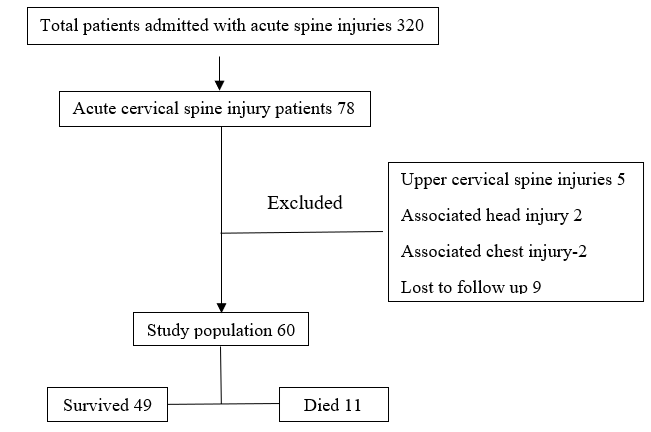
The majority of patients were male 83.3% (n=50), with a mean age of 53.7 +15.2 years. Hypertension was the most common comorbidities, affecting 35% (n=21) of participants, followed by diabetes mellitus in18.3% (n=11).
The most common mechanism of injury was road traffic accidents (n=32), followed by falls from height (n=24) (Table 1). About 30% (n=18) of the patients presented with complete cord injury. Of the total patients, 66% (n=40) underwent operative management and the rest were managed non-operatively. Of 40 patients who were operated, 37.5% (n=15) had undergone surgery within 24 hours, whereas 62.5% (n=25) were operated after 24 hours of injury. Of the 60 patients, 18.3% (n=11) died following CSI. The most common cause of death was sepsis (n=7), followed by autonomic dysreflexia (n=2). The mean time of death was 15.2 + 4.1 days from the day of injury and all the deaths had occurred during the hospital.
|
Characteristics |
n(%) |
|---|---|
|
Sex |
|
|
Male |
50(83.3) |
|
Female |
10(16.7) |
|
Comorbidities |
|
|
DM |
11(18.3) |
|
HT |
21(35.0) |
|
COPD |
3(5.0) |
|
CLD |
1(1.7) |
|
Mechanism of injury |
|
|
RTA |
32(53.3) |
|
Fall from height |
24(40.0) |
|
Hit by falling object |
2(3.3) |
|
Assault |
2(3.3) |
|
Neurology |
|
|
ASIA A |
18(30.0) |
|
ASIA B |
2(3.3) |
|
ASIA C |
11(18.3) |
|
ASIA D |
12(20.0) |
|
ASIA E |
17(28.3) |
|
Definitive treatment |
|
|
Operative |
40(66.7) |
|
Non Operative |
20(33.3) |
|
Timing of surgery |
|
|
Within 24 hours |
15( 37.5) |
|
After 24 hours |
25( 62.5) |
|
Final outcome |
|
|
Survived |
49(81.7) |
|
Died |
11(18.3) |
DM: Diabetes mellitus, HT: Hypertension, COPD: chronic obstructive pulmonary disease, CLD: Chronic liver disease, RTA: road traffic accident, ASIA: American Spinal Injury Association
On univariate logistic regression analysis, factors significantly associated with mortality included complete cord injury (ASIA A) (OR: 2.5; 95% CI: 0.5-3.2; p < 0.001), presence of neurogenic shock (OR: 3.2; 95% CI: 0.5-5.2; p < 0.001), AO type C injury (OR: 0.5; 95% CI: 0.2-30.9; p = 0.03), spinal cord edema ≥4 levels (OR: 0.6; 95% CI: 0.12-2.5; p < 0.001), delayed surgical intervention beyond 24 hours (OR: 2.1; 95% CI: 0.7-3.2; p = 0.03), and use of incentive spirometry (OR: 2.7; 95% CI: 0.6-4.7; p = 0.005) (Table 2). Variables not significantly associated with mortality included age, sex, comorbidities, mechanism of injury, level of injury, and steroid use.
|
Factors |
Total, n (%) |
OR (95% CI) |
p-value |
|
Sex |
|||
|
Male |
50 (83.3) |
Reference |
|
|
Female |
10 (16.7) |
1.14(0.21-6.29) |
0.880 |
|
Comorbidities* |
|||
|
HT |
21 (35.0) |
Reference |
|
|
DM |
11 (18.3) |
0.7 (0.5-3.2) |
0.380 |
|
COPD |
3 (5.0) |
- |
|
|
CLD |
1 (1.7) |
- |
|
|
None |
24 |
||
|
Mechanism of injury |
|||
|
RTA |
32 (53.3) |
Reference |
|
|
Fall from height |
24 (40.0) |
0.71 (0.18-2.79) |
0.628 |
|
Hit by falling object |
2 (3.3) |
- |
|
|
Assault |
2 (3.3) |
- |
|
|
Neurology (ASIA grade) |
|||
|
ASIA A |
18 (30.0) |
2.5 (0.5-3.2) |
0.001 |
|
ASIA B-E |
42 (70) |
Reference |
|
|
Neurogenic shock |
|||
|
No |
42 (70.0) |
Reference |
|
|
Yes |
18 (30.0) |
3.2 (0.5-5.2) |
0.001 |
|
AO classification of injury |
|||
|
A |
22 (36.7) |
Reference |
|
|
B |
5 (8.3) |
2.50 (0.18-34.5) |
0.49 |
|
C |
20 (33.3) |
0.5 (0.2-30.9) |
0.03 |
|
Level of injury |
|||
|
C5 and above |
38 (63.3) |
Reference |
0.18 |
|
C5 and below |
22 (36.7) |
2.48 (0.66-9.34) |
|
|
Level of cord edema |
|||
|
≤2 vertebral levels |
28 (46.7) |
Reference |
|
|
3 levels |
13 (21.7) |
1.75 (0.15-20.8) |
0.65 |
|
≥4 levels |
5 (8.3) |
0.6 (0.12-2.5) |
0.001 |
|
Timing of surgery (n=40 operative patients) |
|||
|
Within 24 hours |
15 (37.5) |
Reference |
|
|
After 24 hours |
25 (62.5) |
2.1 (0.7-3.2) |
0.030 |
|
Steroid |
|||
|
No |
51 (85.0) |
Reference |
|
|
Yes |
9 (15.0) |
1.95 (0.22-17.5) |
0.55 |
|
Incentive spirometry |
|||
|
No |
32 (53.3) |
Reference |
|
|
Yes |
28 (46.7) |
2.7 (0.6-4.7) |
0.005 |
* Comorbidities are not mutually exclusive; patients may have more than one. OR shown for DM only (reference = no DM).
Timing of surgery denominator is n=40 (operative patients only), not total cohort of 60.
Of the 18 patients who presented with ASIA A neurological status at admission, 61.1% (n=11) died. Among the survivors, three patients achieved complete neurological recovery, while four remained status quo at the final follow-up visit. One out of two patients with ASIA B neurology recovered and one remained status quo at final follow up. In contrast, all patients who presented with ASIA C or lower neurological grades demonstrated complete neurological recovery at the final follow-up (Table 3).
|
Initial ASIA grade |
Total (n) |
Death n (%) |
Complete recovery n (%) |
Status quo n (%) |
|
ASIA A |
18 |
11 (61.1) |
3 (16.7) |
4 (22.2) |
|
ASIA B |
2 |
0 |
1 (50.0) |
1 (50.0) |
|
ASIA C, D, and E |
40 |
0 |
40 (100.0) |
0 |
|
Total |
60 |
11 (18.3) |
44 (73.3) |
5 (8.3) |
ASIA: American Spinal Injury Association
DISCUSSION
This study evaluated the mortality patterns and outcome predictors in patients with CSIs. The overall mortality rate of 18.3% observed in our cohort is consistent with previously reported mortality rates in CSIs, which range from 5-20% with median rate of 9.2%12.
Neurological status at presentation emerged as the strongest predictor of mortality in our study. Patients presenting with complete cord injury (ASIA A) had a markedly higher mortality (61.1%) compared to those with incomplete injuries, all of whom achieved complete neurological recovery at final follow-up. This finding is in agreement with prior literature demonstrating that initial ASIA grade is one of the most reliable prognostic indicators of both survival and neurological recovery13.
Neurogenic shock was also significantly associated with mortality. The presence of hypotension and bradycardia following high cervical injury reflects severe disruption of sympathetic pathways and is well recognized as a marker of injury severity14. Persistent hemodynamic instability has been linked to secondary spinal cord ischemia and poorer systemic outcomes. The timely management of neurogenic shock with intravenous fluid and vasopressors with a target mean arterial pressure of above 85mmHg is recommended to prevent cord ischemia. In our cohort, although all the patients with neurogenic shock were started on noradrenaline upon arrival to emergency department, there was delay in initiation of treatment before arrival to Emergency Department (ED) due to lack of facilities especially at the primary health centers and district hospitals.
Radiological factors, including injury morphology and the extent of cord edema on MRI, were positive predictors of mortality. AO classification type C which represents translational injuries had the highest mortality compared to other non-translational injuries.This indicates that the spinal cord sustains severe injury when there is translation of one vertebra over the other. Extensive cord edema has been correlated with greater primary injury severity and ongoing secondary injury cascades7,15.
Spinal cord edema in CSI occurs in two distinct phases: an initial vasogenic phase where the Blood Spinal Cord Barrier (BSCB) physically breaks down, and a later cytotoxic phase driven by biochemical imbalances that draw water directly into the cells. Extensive cord edema can lead to secondary injury of the cord due to local pressure causing localized ischemia as well as myelopathy and neurological deficit due to cell death (apoptosis)15.
Timing of surgery demonstrated a significant association with mortality. Early surgical decompression has been shown in multiple studies, including the Surgical Timing in Acute Spinal Cord Injury Study (STASCIS), to be associated with improved neurological outcomes and potentially reduced complication rates16. The delay in surgical intervention observed in our cases was primarily attributable to prolonged transfer times to the referral center, additional time required for advanced imaging studies such as CT and MRI, limited availability of emergency operating theatre facilities, and suboptimal physiological status of patients precluding immediate surgery. To improve clinical outcomes and reduce mortality, a multidisciplinary management protocol should be established, incorporating rapid emergency response systems with air evacuation of injured patients when necessary, prompt triage and diagnostic evaluation by emergency physicians, expedited imaging, and timely surgical intervention coordinated among spine surgeons, anesthesiologists, and critical care teams. Early tracheostomy in cervical CSI patients has been reported to reduce ventilator-associated pneumonia, facilitate pulmonary toilet, shorten ICU stay, and improve overall outcomes9-11,17.
The use of incentive spirometry was significantly associated with reduced mortality. Pulmonary complications, particularly pneumonia and sepsis, remain the leading causes of death following cervical SCI, as reflected in our finding that sepsis accounted for 63.6% of deaths8. Aggressive respiratory physiotherapy, including incentive spirometry, likely plays a protective role by improving lung expansion, preventing atelectasis, and reducing infection risk.
The timing of intubation and its association with mortality could not be evaluated in this study, as all intubations were performed only after the onset of respiratory arrest or immediately prior to emergency surgery. Previous evidence suggests that timely intubation particularly in patients at high risk of respiratory compromise, such as those with injuries above C5, complete spinal cord injury, or an absent cough reflex may reduce mortality. Early airway protection is especially crucial during the acute phase, when compensatory accessory respiratory muscles are prone to fatigue18.
Unlike findings from other studies, demographic factors such as age and sex were not significantly associated with mortality in our study. This discrepancy may be attributable to the relatively small sample size. Similarly, steroid use was not associated with improved survival, which aligns with contemporary evidence questioning the routine use of high-dose methylprednisolone in acute CSI due to limited neurological benefit and increased risk of complications19.
Overall, our findings reinforce the critical importance of initial neurological status, hemodynamic stability, early surgical intervention, and optimized respiratory care in determining survival after CSI. Strategies focusing on early recognition of neurogenic shock, timely decompression, early tracheostomy when indicated, and aggressive pulmonary rehabilitation may reduce mortality, particularly in resource-limited settings like ours.
LIMITATIONS
This study has several limitations that should be considered while interpreting the findings. First, the retrospective design and relatively small sample size from a single tertiary referral center limits the statistical power and generalizability of the results. In particular, the low number of mortality events precluded the use of multivariate regression analysis, restricting the ability to identify independent predictors of outcome and raising the possibility of residual confounding. Second, patients with associated traumatic brain injury and major poly-trauma were excluded to minimize confounding from non-spinal causes of mortality; however, this approach may limit external validity, as such injuries frequently coexist with cervical spine trauma in real-world settings and may result in underestimation of overall mortality. As the registry captures only patients who reached JDWNRH alive, individuals who sustained fatal CSIs prior to hospital arrival are not represented. Given Bhutan's challenging terrain, dispersed population, and dependence on centralized tertiary care, pre-hospital deaths may be substantial. Consequently, the true burden and mortality of acute CSIs in Bhutan is likely underestimated by this registry-based analysis.
CONCLUSION
This study provides the first registry-based evidence on the proportion and outcomes of acute CSI in Bhutan. Acute CSI accounted for 24.3% of spinal injuries, with an in-hospital mortality of 18.3%. Complete cord injury, neurogenic shock, translational injuries, and extensive cord edema were associated with higher mortality, while early surgical decompression and respiratory rehabilitation were associated with improved survival. Larger prospective studies are needed to validate these findings and guide evidence-based management in resource-limited settings.
ACKNOWLEDGEMENT
We would like to acknowledge the Department of Orthopedics for their support in carrying out the research. We would also like to acknowledge Dr. Tshokey for sharing his insights and providing valuable comments.
REFERENCES
- Harrop JS, Sharan AD, Scheid EH Jr, Vaccaro AR, Przybylski GJ. Tracheostomy placement in patients with complete cervical spinal cord injuries: American Spinal Injury Association Grade A. J Neurosurg Spine. 2004;100(1 Suppl Spine):20-3. [PubMed] [Full Text] [DOI
- Kang SW, Shin JC, Park CI, Moon JH, Rha DW, Cho DH. Relationship between inspiratory muscle strength and cough capacity in cervical spinal cord injured patients. Spinal Cord. 2006;44(4):242-8. [PubMed] [Full Text] [DOI
- Shackford SR, Mackersie RC, Holbrook TL, Davis JW, Hollingsworth-Fridlund P, Hoyt DB, et al. The epidemiology of traumatic death: a population-based analysis. Arch Surg. 1993;128(5):571-5. [PubMed] [Full Text] [DOI
- Lu Y, Shang Z, Zhang W, et al. Global incidence and characteristics of spinal cord injury since 2000-2021: A systematic review and meta-analysis. BMC Medicine. 2024;22(1):285. [PubMed] [Full Text] [DOI
- Joseph C, Deluca P, Johnson K, et al. Spinal cord injury in low- and middle-income countries: epidemiology and management challenges. Global Spine Journal. 2019;9(1):1-10. [PubMed] [Full Text] [DOI
- Shao J, Zhu W, Chen X, Jia L, Song D, Zhou X, et al. Factors associated with early mortality after cervical spinal cord injury. J Spinal Cord Med. 2011;34:555-562. [PubMed] [Full Text] [DOI
- Srinivas BH, Rajesh A, Purohit AK. Factors affecting outcome of acute cervical spine injury: A prospective study. Asian J Neurosurg. 2017;12:416-423. [PubMed] [Full Text] [DOI
- Lemons VR, Wagner FC Jr. Respiratory complications after cervical spinal cord injury. Spine (Phila Pa 1976). 1994;19(20):2315-2320. [PubMed] [Full Text] [DOI
- Alander DH, Andreychik DA, Stauffer ES. Early outcome in cervical spinal cord injured patients older than 50 years of age. Spine (Phila Pa 1976). 1994;19(20):2299-2301. [PubMed] [Full Text] [DOI
- Fehlings MG, Rabin D, Sears W, Cadotte DW, Aarabi B. Current practice in the timing of surgical intervention in spinal cord injury. Spine (Phila Pa 1976). 2010;35(21 Suppl):S166-S173. [PubMed] [Full Text] [DOI
- Segi N, Nakashima H, Ito S, et al. Early versus delayed surgery for elderly traumatic cervical spinal injury: A nationwide multicenter study in Japan. Global Spine J. 2024;15(2):1143-1154. [PubMed] [Full Text] [DOI
- Jubert P, Lonjon G, de Loubresse CG. Complications of upper cervical spine trauma in elderly subjects. A systematic review of the literature. Orthop Traumatol Surg Res 2013; 99(6 Suppl): S301-12. [PubMed] [Full Text] [DOI
- Alfin JD, Shilong DJ, Bot GM, Nwibo OE, Kyesmen NI, Olalere SA, Bakwa ND. Clinical Profile and Predictors of Early Outcome in Patients with Traumatic Spinal Cord Injury in Jos, North-Central Nigeria. J West Afr Coll Surg. 2023;13(2):49-58. [PubMed] [Full Text] [DOI
- Hagen E. M. (2015). Acute complications of spinal cord injuries. World J orthop. 2015; 6(1), 17-23. [PubMed] [Full Text] [DOI
- Seblani, M., Decherchi, P., & Brezun, J. M. (2023). Edema after CNS Trauma: A Focus on Spinal Cord Injury. Int J Mol Sci. 2023; 24(8), 7159. [PubMed] [Full Text] [DOI
- Fehlings MG et al (2012) Early versus delayed decompression for traumatic cervical spinal cord injury: results of the Surgical Timing in Acute Spinal Cord Injury Study (STASCIS). PLoS One. 2012; 7(2):e32037. [PubMed] [Full Text] [DOI
- Khan M, Prabhakaran K, Jehan F, Anderson P, Con J, Lombardo G, Rhee P, Latifi R. Early tracheostomy in patients with cervical spine injury reduces morbidity and improves resource utilization. Am J Surg. 2020; 220(3):773-77. [PubMed] [Full Text] [DOI
- Yonemitsu T, Kinoshita A, Nagata K, Morishita M, Yamaguchi T, Kato S. Timely intubation with early prediction of respiratory exacerbation in acute traumatic cervical spinal cord injury. BMC Emerg Med. 2021; 21(1):136. [PubMed] [Full Text] [DOI
- Lee BJ, Jeong JH. Review: Steroid Use in Patients With Acute Spinal Cord Injury and Guideline Update. Korean J Neurotrauma. 2022; 18(1):22-30. [PubMed] [Full Text] [DOI
|
AUTHORS CONTRIBUTION Following authors have made substantial contributions to the manuscript as under: L: Conceptualization, data collection, data analysis, manuscript writing and review UT: Data collection, data analysis, manuscript writing and review Authors agree to be accountable for all respects of the work in ensuring that questions related to the accuracy and integrity of any part of the work are appropriately investigated and resolved. |
|
CONFLICT OF INTEREST |
|---|
|
None |
|
GRANT SUPPORT AND FINANCIAL DISCLOSURE |
|
None |