Bhutan-focused COVID-19 publications, 2020-2024: A Scopus-based bibliometric analysis
- ¹Faculty of Nursing and Public Health, Khesar Gyalpo University of Medical Sciences of Bhutan, Thimphu, Bhutan
ABSTRACT
Background: The COVID-19 pandemic stimulated unprecedented global research activity. Bhutan, despite its small population and limited research infrastructure, contributed to the COVID-19 related literature. This study aimed to analyse Bhutan-focused COVID-19 research productivity and scholarly publications using bibliometric analysis. Methods: Publications published between 2020 and 2024 were retrieved from Scopus and analysed using Microsoft Excel 2019 and VOSviewer version 1.6.20. Results: A total of 60 publications were identified. Research output increased significantly over time, from 6 publications (10%) in 2020 to 18 publications (30%) in 2021, reflecting heightened research engagement during the early phase of the pandemic. The Asia-Pacific Journal of Public Health published the highest number of publications. 18 publications (30%) remained uncited, and 9 publications (15%) received 10 or more citations. Bhutan-focused COVID-19 publications emphasised how Gross National Happiness principles and cultural values guided the country’s public health response to the pandemic. Conclusion: Bhutan-focused COVID-19 publications demonstrated a timely and collaborative research response to the pandemic. While the publication output and uptake of open-access publishing were encouraging, citation impact remained modest. Increasing research visibility, dissemination, and the inclusion in database indexes may help strengthen the impact of Bhutan-focused research in the future.
INTRODUCTION
The COVID-19 outbreak rapidly spread across the globe and the World Health Organization declared it a pandemic on March 11, 20201,2. This unprecedented crisis tested healthcare systems, economic sustainability, and government policies globally3-5. In the wake of the global COVID-19 pandemic, the scientific community witnessed an unprecedented surge in research and publications, reflecting the urgent need for understanding, managing, and combating the virus6-10. Scholars worldwide produced a significant body of literature on COVID-19 and its multifaceted impacts11,12. Bhutan emerged as a unique case in its approach to the pandemic13,14. With its distinctive socio-cultural context, deep spiritual efforts, and stringent public health measures, Bhutan adopted a range of strategies to prevent and control the spread of COVID-1914-17.
Bhutan-focused COVID-19 research has been conducted by Bhutanese and international scholars through independent and collaborative efforts. There is yet no comprehensive bibliometric analysis of this set of publications. Such an analysis can provide valuable insights into how scholars explored and examined various aspects of the pandemic. Therefore, this study aimed to provide a comprehensive bibliometric analysis of Bhutan-focused COVID-19 research by examining publications trends, authorship patterns and productivity, productive journals, institutional productivity, collaboration networks, citation impact, keyword trends, and dominant research themes.
MATERIALS AND METHODS
Study design
The study employed a retrospective bibliometric study to quantitatively analyse the publication characteristics and research trends of Bhutan-focused COVID-19 literature published between 2020 to 2024. The study was conducted in accordance with established bibliometric analysis guidelines18-20.
Data Source
Scopus was selected because it includes a large collection of biomedical and health-related publications, and it is well suited for bibliometric analysis. Scopus is accessible to eligible institutions in Bhutan through the Research4Life partnership programs.
Search strategies
The search strategy employed the following search terms: (COVID OR COVID-19 OR COVID19 OR novel OR CORONA* OR 2019-nCoV OR nCoV2019 OR SARS-CoV-2 OR pandemic) AND (Bhutan*). These search terms were used to create a broad search and maximise the retrieval of Bhutan-focused COVID-19 publications. These terms were selected because they represent the most commonly used keywords appearing in COVID-19 related publications and the search strategy was informed by previous bibliometric studies of COVID-19 that used a similar combination of terms22-24,26,36.
The search was conducted on 08 April 2025. The search applied keywords to the title, abstract, and keyword search fields. The search was limited to publications published between 2020 and 2024 and written in English. No other filters were applied to maximise the retrieval of relevant publications. A total of 232 records were retrieved and exported from Scopus in Comma-Separated Values (CSV) format. The data were saved in CSV and Microsoft Excel formats for analysis.
Publication selection
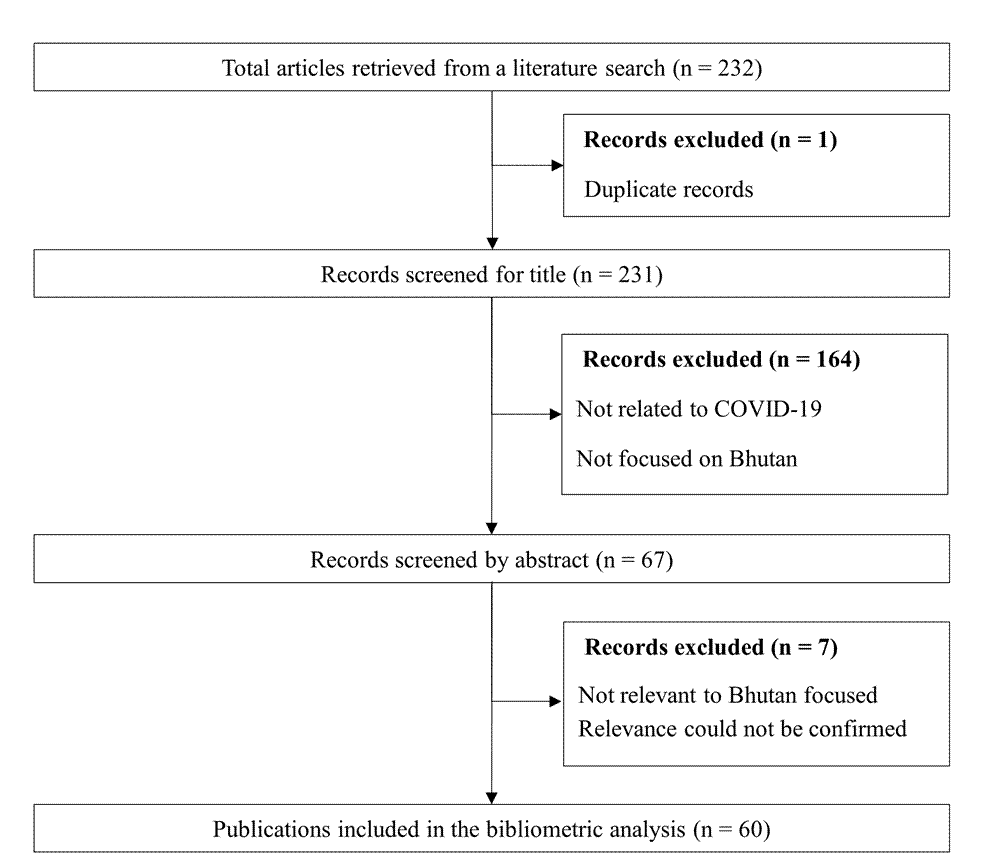
The titles and abstracts of all retrieved records were screened by both authors for relevance. Records retrieved were included if they covered both topics, COVID-19 and Bhutan, or if Bhutan was a component of the study context in a multi-country study, regional analysis, or comparative study. Publications that were not directly related to Bhutan and COVID-19 were excluded. Both authors reviewed and approved the final selection of documents. The flow diagram in Figure 1 presents the publication screening and selection process. After screening, a final corpus of 60 publications was included for the bibliometric analysis.
Analysis
Microsoft Excel 2019 was used to analyse total publications, publication by document types, authorship patterns, author productivity, and citation metrics. VOSviewer version 1.6.20 was used to analyse institutional productivity, country collaboration network, and keyword analysis.
Ethics statement
Ethical clearance was sought from the Institutional Review Board (IRB), Khesar Gyalpo University of Medical Sciences of Bhutan (KGUMSB). The ethical review exemption (PN24-044/1410 dated 30 December 2024) was granted by IRB, KGUMSB since the study involved review of literature with no direct contact with human subjects.
RESULTS
Total publications
As presented in Table 1, there were 6 publications in 2020, the first year of the COVID-19 pandemic. In 2021 and 2022, the number of publications increased threefold to 18 and 17 respectively. In 2023 and 2024, as the world began to emerge from pandemic conditions, publication numbers dropped to 12 and 7 respectively.
|
Year |
Total Publications (%) |
|---|---|
|
2020 |
6 (10%) |
|
2021 |
18 (30%) |
|
2022 |
17 (28%) |
|
2023 |
12 (20%) |
|
2024 |
7 (12%) |
|
Total |
60 (100%) |
The first publication was an article published in June 2020, titled “Case report: The first case of COVID-19 in Bhutan” by Shankar LeVine et al. and published in the American Journal of Tropical Medicine and Hygiene. It reported the country’s first case of COVID-19, which was detected on March 5, 20201when a tourist was diagnosed with the virus after he arrived in the country25. Subsequently, people were required to maintain physical distance in all public places, and leisure travel within the country was restricted1. Other publications from 2020 discussed the country’s multifaceted response to the pandemic correlating its evolution and impact. These publications reported nationwide lockdowns, adaptations in healthcare delivery, the return of medical professionals from abroad, and the shift to online education.
Table 2 presents the different document types; the most common was an article. There were 38 articles, constituting 63.3% of the corpus.
|
Document Types |
Total Publications |
Percentage (%) |
|---|---|---|
|
Article |
38 |
63.3 |
|
Book chapter |
10 |
16.7 |
|
Letter |
4 |
6.7 |
|
Review |
3 |
5.0 |
|
Note |
3 |
5.0 |
|
Conference paper |
2 |
3.3 |
|
Total |
60 |
100% |
Authorship patterns and author productivity
As presented in Table 3, the most common authorship pattern was two-author publications, accounting for 16 publications (26.7%). We analysed author productivity based on the number of first-authored publications (Table 4). Author names and Scopus Author ID were reviewed to enable accurate attribution, and authors with identical names were distinguished using their institutional affiliations and publication records. Thinley Dorji (Scopus Author ID: 57211951182) was the most productive author with 4 publications comprising 2 articles, 1 review, and 1 note. Four authors had 3 publications each, while one author had 2 publications. Among the top six authors, four had published their first-authored publication as an article, while two had published letters. Collectively, the top six authors produced 11 articles, 3 reviews, 2 notes, and 2 letters.
|
Authorship Pattern |
Total Publications |
% of Publications |
|---|---|---|
|
1 Author |
12 |
20.0 |
|
2 authors |
16 |
26.7 |
|
3 authors |
7 |
11.7 |
|
4 authors |
8 |
13.3 |
|
5 authors |
6 |
10.0 |
|
6 authors |
5 |
8.3 |
|
7 authors |
3 |
5.0 |
|
9 authors |
2 |
3.3 |
|
11 authors |
1 |
1.7 |
|
Total |
60 |
100% |
|
Author |
Author ID |
Total Publications |
Rank |
Publication Types (Year) |
|---|---|---|---|---|
|
dorji, thinley |
57211951182 |
4 |
1 |
Article (2020), Review (2021), Article (2021), Note (2021) |
|
tamang, saran tenzin |
57221371037 |
3 |
2 |
Article (2021), Article (2021), Note (2022) |
|
tsheten, tsheten |
57192808608 |
3 |
2 |
Letter (2021), Article (2022), Review (2023) |
|
tshokey, tshokey |
56610328400 |
3 |
2 |
Article (2021), Article (2021), Article (2022) |
|
gyeltshen, dawa |
57217927091 |
3 |
2 |
Letter (2020), Article (2022), Article (2022) |
|
gyeltshen, kinley |
55201322200 |
2 |
3 |
Article (2021), Article (2023) |
Most productive journals
In terms of the most productive journals, ones that published the highest number of publications, Table 5 shows that Asia-Pacific Journal of Public Health, American Journal of Tropical Medicine and Hygiene, Population Medicine, International Journal of Environmental Research and Public Health, Bhutan Health Journal, Frontiers in Public Health, and PLOS ONE were the top seven. The rest of the journals have one publication each. Most publications were published in public health and medicine-related journals. The Bhutan Health Journal (BHJ) was the only journal from Bhutan among the 60 publications analysed and was also among the most productive journals, with two publications. Notably, any COVID-19 related publications in BHJ that were published before April 2024 were not retrievable through Scopus because Scopus only included the journal for indexing starting in April 2024. BHJ was represented for only the final nine months of the study period, which means it is possible that more than three years of COVID-19 related publications from the journal were excluded from this study.
|
Rank |
Journal |
Publications |
|---|---|---|
|
1 |
Asia-Pacific Journal of Public Health |
5 |
|
2 |
American Journal of Tropical Medicine and Hygiene |
3 |
|
3 |
Population Medicine |
3 |
|
4 |
International Journal of Environmental Research and Public Health |
3 |
|
5 |
Bhutan Health Journal |
2 |
|
6 |
Frontiers in Public Health |
2 |
|
7 |
PLOS ONE |
2 |
Institutional productivity
Institutional productivity was analysed in VOSviewer using co-authorship analysis, with organisations as the unit of analysis and the full counting method. The minimum number of documents and citations per organisation were set to 2 and 1 respectively. Under the full counting method, each institution received one publication credit for every publication in which it appeared as an author affiliation, regardless of the number of collaborating institutions. Institutional affiliations were manually reviewed and standardised to enable consistency across records. Based on these criteria, 14 of the 91 organisations met the threshold. As presented in Table 6, Jigme Dorji Wangchuck National Referral Hospital was the most productive institution, with the highest number of publications (17), citations (114), and total link strength (19). Among the 14 institutions meeting the threshold, 9 were from Bhutan, 2 in Australia and one each from the United Kingdom, the Philippines, and India.
|
Rank |
Country |
Institution |
Total Publications |
Total Citations |
Total Link |
|---|---|---|---|---|---|
|
1 |
Bhutan |
Jigme Dorji Wangchuck National Referral Hospital, Thimphu |
17 |
114 |
19 |
|
2 |
Bhutan |
Ministry of Health, Thimphu |
10 |
55 |
15 |
|
3 |
Bhutan |
Royal Centre for Disease Control, Thimphu |
8 |
36 |
13 |
|
4 |
Bhutan |
Kidu Mobile Medical Unit, His Majesty’s People’s Project, Thimphu |
7 |
46 |
12 |
|
5 |
Bhutan |
Central Regional Referral Hospital, Gelephu |
7 |
38 |
11 |
|
6 |
Bhutan |
Eusa Hospital, Wangdue Phodrang |
4 |
6 |
6 |
|
7 |
United Kingdom |
Department of Global Health and Development, London School of Hygiene Tropical Medicine |
2 |
2 |
4 |
|
8 |
Philippines |
Faculty of Management and Development Studies, University of The Philippines Open University |
2 |
2 |
4 |
|
9 |
Bhutan |
Samtse General Hospital, Samtse |
2 |
13 |
4 |
|
10 |
Australia |
Telethon Kids Institute, Nedlands |
2 |
15 |
4 |
|
11 |
India |
Department of Internal Medicine, Armed Forces Medical College, Maharashtra University of Health Sciences |
2 |
8 |
3 |
|
12 |
Australia |
Faculty of Health Sciences, Curtin University |
2 |
26 |
3 |
|
13 |
Bhutan |
Phuentsholing General Hospital, Chukha |
2 |
3 |
3 |
|
14 |
Bhutan |
Khesar Gyalpo University of Medical Sciences of Bhutan, Thimphu |
2 |
6 |
1 |
Country collaboration network
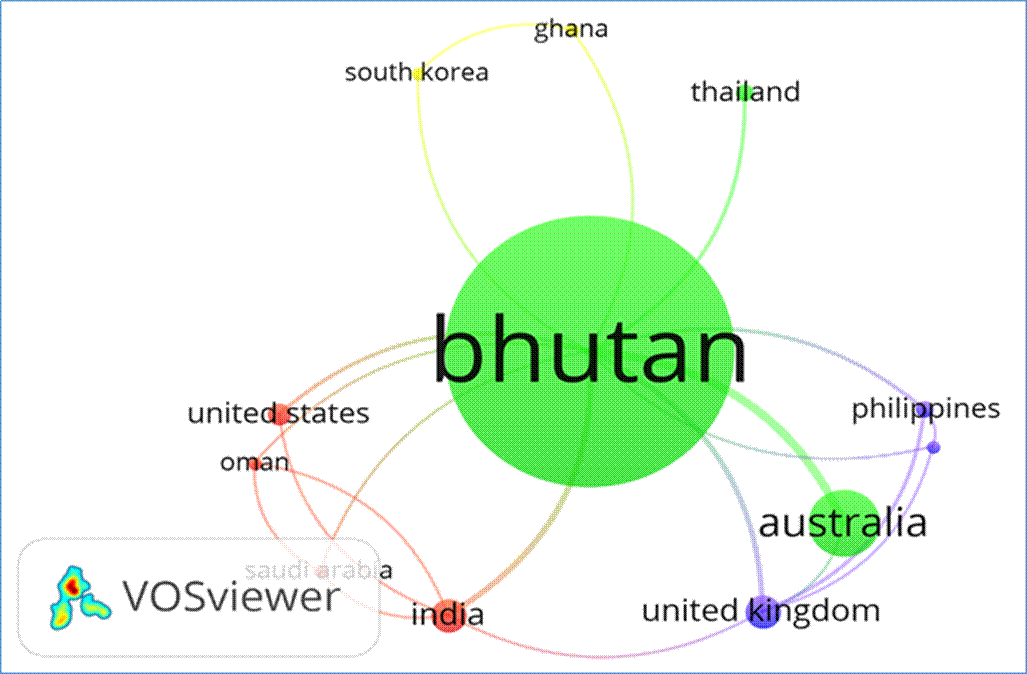
Country network was analysed in VOSviewer using co-authorship analysis, with countries as the unit of analysis and the full counting method. Under the full counting method, each country received one publication credit for every publication in which at least one author was affiliated with that country, regardless of the number of collaborating countries. The minimum number of documents per country was set to 1. 17 countries met the threshold but only 12 countries formed the largest connected collaboration network and were included in the visualisation (Figure 2). In the VOSviewer network visualisation, the size of each circle represents the number of publications and colors indicate collaboration clusters. The lines between countries represent co-authorship links, with thicker lines indicating stronger collaborative relationships between countries26.
Citation analysis
These 60 publications have been cited 269 times (Table 7). 15% (n=9) of publications have been cited 10 or more times. 30% (n=18) have not been cited. As presented in Table 8, publications published in 2021 accounted for the highest number of citations (n=159). The median citation count was 2 and the interquartile range (IQR) was 0-5.25, and the publication corpus had an h-index of 9. Table 9 presents the top 10 cited publications and focus on Bhutan’s response to COVID-19, addressing public health strategies, vaccination efforts, digital adaptation, and community engagement. Notably, the top 10 most cited publications were all published in 2021 and 2022. Their higher citation counts may be due to their earlier publication, which gave them more time to accumulate citations (and to be discovered and read, and to influence others) than more recent publications.
|
Citation Count |
No. of Publications |
% of Publications |
Total citation |
|---|---|---|---|
|
0 |
18 |
30.0% |
0 |
|
1 |
8 |
13.3% |
8 |
|
2 |
8 |
13.3% |
16 |
|
3 |
4 |
6.7% |
12 |
|
4 |
4 |
6.7% |
16 |
|
5 |
3 |
5.0% |
15 |
|
6 |
1 |
1.7% |
6 |
|
7 |
4 |
6.7% |
28 |
|
9 |
1 |
1.7% |
9 |
|
10 |
2 |
3.3% |
10 |
|
13 |
2 |
3.3% |
26 |
|
16 |
1 |
1.7% |
16 |
|
17 |
1 |
1.7% |
17 |
|
19 |
1 |
1.7% |
19 |
|
28 |
1 |
1.7% |
28 |
|
33 |
1 |
1.7% |
33 |
|
Total |
60 |
100% |
269 |
|
Year |
No. of Publications |
Total Citations |
|---|---|---|
|
2020 |
6 |
40 |
|
2021 |
18 |
159 |
|
2022 |
17 |
50 |
|
2023 |
12 |
19 |
|
2024 |
7 |
1 |
|
Total |
60 |
269 |
|
Author full names |
Title |
Year |
Source title |
Vol |
Issue |
Cited by |
|---|---|---|---|---|---|---|
|
Khan, Shad Ahmad; Epoc, Ferdinand; Gangwar, Veer; Ligori, T. Antony A; Ansari, Zaid Ahmed |
Will online banking sustain in Bhutan post COVID-19? a quantitative analysis of the customer e-satisfaction and e-loyalty in the Kingdom of Bhutan |
2021 |
Transnational Marketing Journal |
9 |
3 |
33 |
|
LeVine, Shankar; Dhakal, Guru Prasad; Penjor, Tshering; Chuki, Pem; Namgyal, Kesang; Tshokey; Watts, Melanie |
Case report: the first case of COVID-19 in Bhutan |
2020 |
American Journal of Tropical Medicine and Hygiene |
102 |
6 |
28 |
|
Dorji, Thinley; Tamang, Saran Tenzin |
Bhutan's experience with COVID-19 vaccination in 2021 |
2021 |
BMJ Global Health |
6 |
5 |
19 |
|
Rocha, Ian Christopher N. |
Employing medical anthropology approach as an additional public health strategy in promoting COVID-19 vaccine acceptance in Bhutan |
2021 |
International Journal of Health Planning and Management |
36 |
5 |
17 |
|
Dorji, Thinley |
Perspective piece: The Gross National Happiness framework and the health system response to the COVID-19 pandemic in Bhutan |
2021 |
American Journal of Tropical Medicine and Hygiene |
104 |
2 |
16 |
|
Tsheten, Tsheten; Wangchuk, Sonam; Wangmo, Dechen; Clements, Archie C. A; Gray, Darren J; Wangdi, Kinley |
COVID-19 response and lessons learned on dengue control in Bhutan |
2021 |
Journal of Medical Entomology |
58 |
2 |
13 |
|
Penjor, Kinley; Tobgyal; Zangpo, Tandin; Clements, Archie C. A.; Gray, Darren J.; Wangdi, Kinley |
Has COVID19 derailed Bhutan’s national malaria elimination goal? A commentary |
2021 |
Malaria Journal |
20 |
1 |
13 |
|
Tamang, Saran Tenzin; Lhendup, Karma; Dorji, Thinley |
Control of travel-related COVID-19 in Bhutan |
2021 |
Journal of Travel Medicine |
28 |
7 |
10 |
|
Dorji, Thinley; Wangmo, Karma; Yezer; Wangchuk, Tashi; Tshokey; Wangdi, Kinley |
Knowledge, attitude, and practice toward COVID-19 among Sherubtse college students in Bhutan: a web-based cross-sectional study |
2021 |
Frontiers in Public Health |
9 |
10 |
|
|
Tsheten, Tsheten; Tenzin, Phurpa; Clements, Archie C. A.; Gray, Darren J.; Ugyel, Lhawang; Wangdi, Kinley |
The COVID-19 vaccination campaign in Bhutan: strategy and enablers |
2022 |
Infectious Diseases of Poverty |
11 |
1 |
9 |
Keyword analysis
Keyword co-occurrence analysis was conducted in VOSviewer using all keywords and author keywords, with the full counting method applied. For the all-keywords analysis, minimum occurrences of a keyword of 10 were applied. Of 537 keywords, 14 met this threshold (Fig 3). The top five all-keywords were Bhutan (46), covid-19 (40), human (31), humans (26), and coronavirus disease 2019 (21) occurrences. For the author-keyword analysis, the minimum occurrences of a keyword of 2 were applied. Of 154 keywords, 19 met the threshold (Fig 4). The top five author keywords were Bhutan (28 occurrences), covid-19 (21), sars-cov-2 (5), pandemic (4), and public health (3).
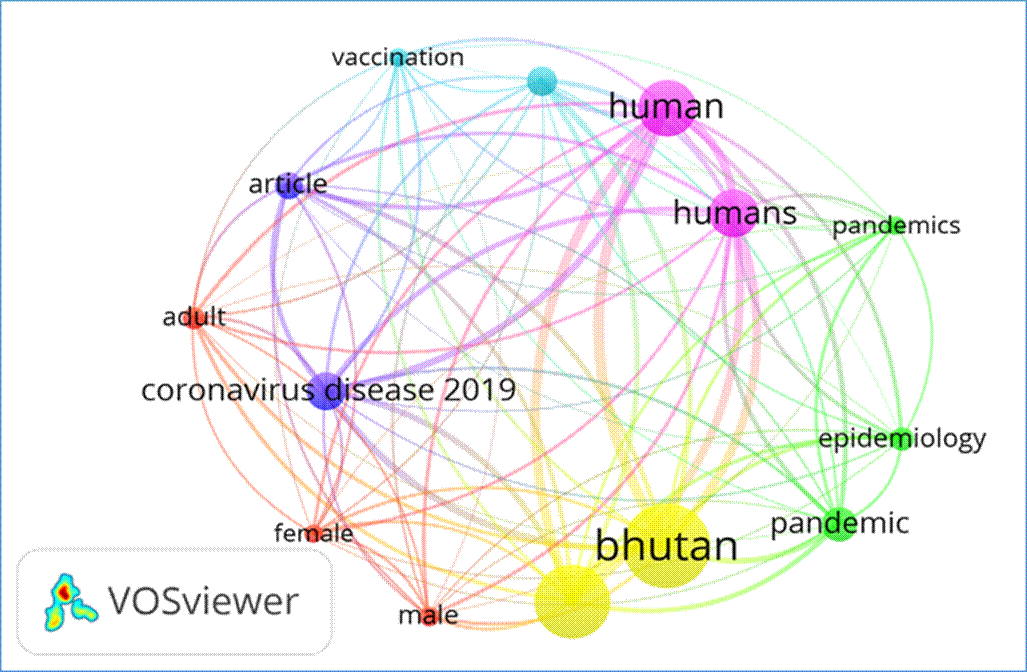
The network comprises 14 keywords grouped into 6 clusters, with 91 links and a total link strength of 963.
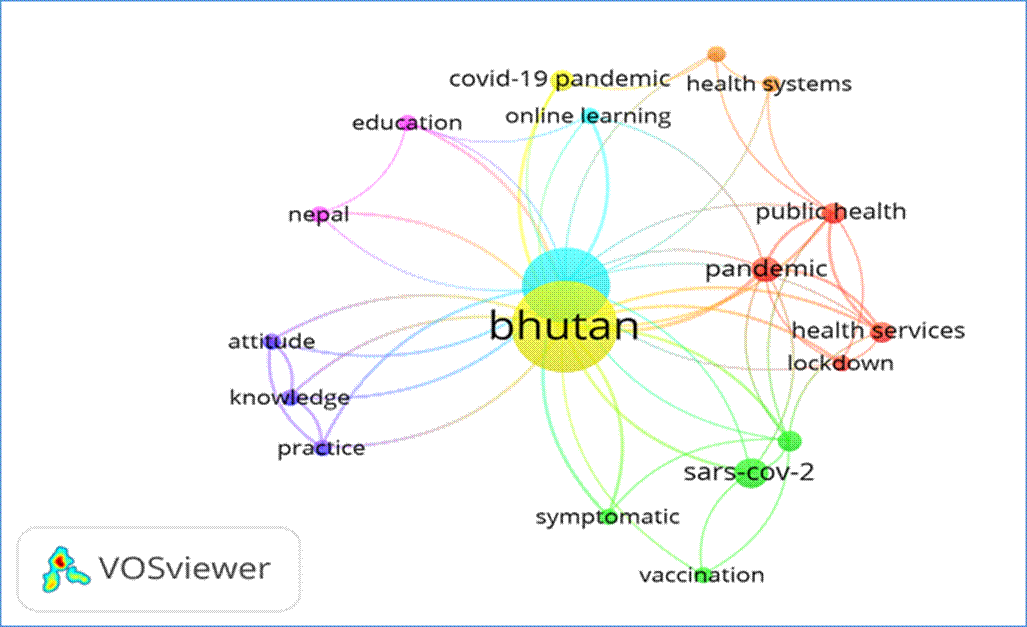
The network comprises 19 keywords grouped into 7 clusters, with 56 links and a total link strength of 96.
Themes analysis based on abstract review
The keyword co-occurrence analysis suggested publications were predominantly health related. To further explore the thematic focus of the publications, the abstracts of the corpus were reviewed. In addition to the health sector, a smaller number of publications covered other pandemic-affected sectors such as education, banking, and tourism, which indicates that there was some multidisciplinary research activity in response to the pandemic.
The health sector’s research themes focused on the handling of the index case of a COVID-19 patient, integrating cultural and religious practices into public health strategies, such as using auspicious timing and Buddhist astrology for vaccine rollout, and conducting prayer ceremonies to enhance community acceptance. It also covered the principles of Gross National Happiness, guiding the implementation of public health measures such as facility quarantine, quarantine periods, free testing and treatment, contact tracing, and zoned travel restrictions within communities. Other themes included mental health impacts, tele-counseling services, transmission dynamics, disruption to routine healthcare services, secondary health effects, and environmental concerns associated with facemask waste.
In the education sector, publications examined the transition from face-to-face teaching to online learning during the pandemic. Studies highlighted the adoption of digital learning platforms to maintain educational continuity and reported appropriate COVID-19 preventive practices among students. However, challenges such as poor internet connectivity, limited digital infrastructure, and server overload constrained the effectiveness of online learning, particularly in rural areas.
In the banking sector, publications highlighted the accelerated adoption of digital financial services, with customer satisfaction and e-service quality identified as key factors influencing their continued use. From the tourism sector, publications examined the severe impacts of the pandemic on tourism operators, local communities, and international travel. Studies highlighted fiscal relief measures, alternative livelihood opportunities, sustainable tourism practices, and digital transformation as important strategies for recovery and long-term resilience.
DISCUSSION
During and post-pandemic, several studies related to COVID-19 have been conducted in multidisciplinary fields28-32. Researchers worldwide embarked on intense research efforts from the onset of the pandemic and publications increased over time30. Subsequently, numerous bibliometric analyses have been conducted to obtain valuable information about the publications related to COVID-1926,33-36. Our analysis showed that publication peaked in 2021 and 2022, consistent with global trends showing an exponential growth in COVID-19 related publications during the same period40-42. The rapid increase in publications likely reflects the urgent demand for evidence to support public health decision-making, clinical management, vaccination strategies, and broader pandemic response measures during the pandemic29,37-39.
In Southeast Asia, a bibliometric study examined COVID-19 research trends and collaborations from 2020 to 202111. For comparison with that study11, our study examined publication output from the same period and found 24 publications, 6 in 2020 and 18 in 2021. In contrast, fewer than 10 publications in total were reported from Cambodia, Myanmar, and Laos combined and none identified from Timor-Leste. These are countries that, at the time, shared the United Nations Least Developed Countries status with Bhutan. This comparison suggests that Bhutan demonstrated a relatively strong research response during the early phase of the pandemic. The international collaboration patterns observed in our study are consistent with that study’s findings11, which reported extensive research partnerships within and outside Southeast Asia. Similarly, our study’s analysis showed that Bhutanese scholars collaborated with international researchers and contributed to Bhutan-focused COVID-19 publications, highlighting the important role of international partnerships in facilitating knowledge exchange, resource sharing, and the conduct of collaborative research.
Previous bibliometric studies of Bhutan’s research output have reported citation metrics43,44, but there are no bibliometric studies of COVID-19 publications related to Bhutan. This study provided an assessment of citation performance of Bhutan-focused COVID-19 publications and found a relatively modest citation impact. The relatively low citation counts observed in this study can be associated with many of the structural factors that have been reported45-48to affect visibility and recognition of research from the Global South, including disparities in research funding, limited representation within major bibliographic databases, and database indexing practices.
An additional observation from this study was that the majority (n=9) of the top 10 cited publications (90%) were published as Open Access (OA) publications. This finding is consistent with previous research suggesting that OA publications benefit from greater visibility, accessibility, and dissemination, which may contribute to higher citation rates49-51. During the COVID-19 pandemic, many publishers temporarily expanded open-access policies and made COVID-19 related research freely available to support the rapid dissemination of scientific evidence52. This global shift towards greater accessibility may partly explain the high proportion of OA publications observed in our study. In addition to the predominance of OA publications among the most cited publications, 10 of the 11 articles (document type) published by the six most productive first-authors, all of whom were Bhutanese scholars, were published as OA, indicating substantial uptake of OA publishing among Bhutanese researchers. However, evidence for the Open Access Citation Advantage remains inconsistent and inconclusive. While studies53,54 have reported higher citation rates for OA publications, other studies55-58 have found that any citation advantage is inconsistent across disciplines, publication types, and publishing models. Although this study did not examine the relationship between OA publishing models and citation counts, the high proportion of OA publications among the most cited and by the most productive first authors suggests that OA publishing may be associated with greater visibility, dissemination, and citation performance of Bhutan-focused COVID-19 research.
LIMITATIONS
The main limitation is with regard to the creation of the corpus for analysis. The retrieval was limited to one database, Scopus, which the authors had access to through the Research4Life programs. Including Web of Science would possibly have identified additional publications and made a larger corpus. However, the authors did not have access to this database. Another limitation is that the search strategy might have omitted a relevant keyword and might have missed publications that were within the scope of the study and might have contributed to different claims and conclusions.
Another effect of limiting the search to Scopus is that it also omits local and regional publications that are not indexed in Scopus. This includes any articles published in the Bhutan Health Journal before it was added to Scopus indexing. Grey literature and reports were not retrieved; therefore, these sources are not represented in our corpus and are absent from this analysis. Citation-based indicators are time-dependent, and therefore, the total publications, most productive journals, institutional rankings, top-cited publications and citation metrics will change over time.
CONCLUSIONS
This analysis identified that collaborative research response and publications were primarily focused on public health and clinical themes and demonstrated strong uptake of OA publishing. Despite these positive indicators, the overall citation impact was modest, and a number of publications have not been cited. These findings suggest that, while Bhutanese researchers make contributions to the scientific literature, challenges remain in the dissemination and scholarly impact of their work. Increasing the visibility and recognition of local research outputs and expanding its presence within the indexing databases may enhance their impact in the future.
ACKNOWLEDGEMENT
We acknowledge the Research4Life partnership programs (http://www.research4life.org) for providing free access to Scopus to eligible institutions in Bhutan, which enabled the authors to access, retrieve, and use the data for this study.
REFERENCES
- Ministry of Health and World Health Organization. The people’s pandemic: how the Himalayan Kingdom of Bhutan staged a world-class response to COVID-19. Ministry of Health; 2022.[Full Text
- Pellino G, Spinelli A. How coronavirus disease 2019 outbreak is impacting colorectal cancer patients in Italy: a long shadow beyond infection. Dis Colon Rectum. 2022;63(6):720-722. [Full Text] [DOI
- Blumenthal D, Fowler EJ, Abrams M, Collins SR. Covid-19: implications for the health care system. N Engl J Med. 2020;383(15): 1483-1488. [Full Text] [DOI
- Fang J, Gozgor G, Nolt JH. Globalisation, economic uncertainty and labour market regulations: implications for the COVID-19 crisis. World Econ. 2022;45(7):2165-2187. [Full Text] [DOI
- Withers M, Henderson S, Shivakoti R. International migration, remittances and COVID-19: economic implications and policy options for South Asia. J Asian Public Policy. 2021;15(2):284–99. [Full Text] [DOI
- Ebadi A, Xi P, Tremblay S, Spencer B, Pall R, Wong A. Understanding the temporal evolution of COVID-19 research through machine learning and natural language processing. Scientometrics. 2021;126(1):725–39. [Full Text] [DOI
- Gupta A, Aeron S, Agrawal A, Gupta H. Trends in COVID-19 publications: streamlining research using NLP and LDA. Front Digit Health. 2021;3:686720. [Full Text] [DOI
- Miller RC, Tsai CJ. Scholarly publishing in the wake of COVID-19. Int J Radiat Oncol Biol Phys. 2020;108(20):491-495. [Full Text] [DOI
- Kambhampati SBS, Vaishya R, Vaish A. Unprecedented surge in publications related to COVID-19 in the first three months of pandemic: a bibliometric analytic report. J Clin Orthop Trauma. 2020;11(Suppl 3):S304–6. [Full Text] [DOI
- Malekpour MR, Abbasi-Kangevari M, Azadnajafabad S, Ghamari SH, Rezaei N, Rezazadeh-Khadem S, et al. How the scientific community responded to the COVID-19 pandemic: a subject-level time-trend bibliometric analysis. PloS One. 2021;16(9). [Full Text] [DOI
- Tantengco OAG. Investigating the evolution of COVID-19 research trends and collaborations in Southeast Asia: a bibliometric analysis. Diabetes Metab Syndr. 2021;15(6):102325. [Full Text] [DOI
- Wang P, Tian D. Bibliometric analysis of global scientific research on COVID-19. J Biosaf Biosecur. 2021;3(1):4-9. [Full Text] [DOI
- Gyeltshen D, Dema T, Ahmadi A, Lucero-Prisno DE. Bhutan’s COVID-19 vaccination efforts and the evolution of COVID-19 cases in the aftermath. Asia Pac J Public Health. 2022;34(1):125–7. [Full Text] [DOI
- Tenzin K, Pem D, Wangmo D, Tshering K, Phurpa P, Choden K, et al. COVID-19 challenges and management of human resource in health, Bhutan’s unique approach: medical university’s contribution. Bhutan Health J. 2022;8(2):21–4. [Full Text] [DOI
- Dorji T. The Gross National Happiness framework and the health system response to the COVID-19 pandemic in Bhutan. Am J Trop Med Hyg. 2021;104(2):441-445. [Full Text] [DOI
- Dorji TC. Braving COVID-19 through the Gross National Happiness way in Bhutan. In: Nanwani S, Loxley W, editors. Social structure adaptation to COVID-19: Impact on humanity. Routledge; 2024. pp. 264-271. [Full Text
- Tshokey T. An update on COVID-19 in Bhutan. Bhutan Health J. 2020;6(1):3. [Full Text] [DOI
- Donthu N, Kumar S, Mukherjee D, Pandey N, Lim WM. How to conduct a bibliometric analysis: an overview and guidelines. J Bus Res. 2021;133:285–96. [Full Text] [DOI
- Li H, Wu H, Zhang C. A pocket practical guide on bibliometric analysis: bridging informatics with science in a rapid manner. Ann Med Surg (Lond). 2024;86(10):6344–5. [Full Text] [DOI
- van Eck NJ, Waltman L. Citation-based clustering of publications using CitNetExplorer and VOSviewer. Scientometrics. 2017;111(2):1053–70. [Full Text] [DOI
- Al-Habsi J, Al-Hatmi A, Al-Saadi T. The top 100 most cited neurosurgical articles on COVID-19: a bibliometric analysis. World Neurosurg. 2023;170:22-27.e21. [Full Text] [DOI
- Cai QY, Pan YR, Deng BN, Hu WD, He ZY, Zhang X, et al. Global research on emerging trends of obstetrics during the COVID-19 pandemic: a bibliometric analysis. Medicine. 2024;103(31). [Full Text] [DOI
- Singh T, Rao Padubidri J, Shetty PH, Antony Manoj M, Mary T, Thejaswi Pallempati B. The top 50 most-cited articles about COVID-19 and the complications of COVID-19: a bibliometric analysis [version 3; peer review: 1 approved with reservations]. F1000 Res. 2024;13:105-130. [Full Text] [DOI
- Zhong H, Zhou Y, Mei S, Tang R, Feng J, He Z, et al. Scars of COVID-19: a bibliometric analysis of post-COVID-19 fibrosis. Front Public Health. 2022;10:967829. [Full Text] [DOI
- Royal Government of Bhutan. Press release: first confirmed COVID-19 case in Bhutan. Thimphu: Royal Government of Bhutan; 2020. [cited 19 October 2025]. Available from: [Full Text
- Pasin O, Pasin T. Bibliometric analysis of COVID-19 and the association with the number of total cases. Disaster Med Public Health Prep. 2022;16(5):1947-1952. [Full Text] [DOI
- Wang Q, Yang KL, Zhang Z, Wang Z, Li C, Li L, et al. Characterization of global research trends and prospects on single-cell sequencing technology: bibliometric analysis. J Med Internet Res. 2021;23(8):e25789. [Full Text] [DOI
- Duan Y, Liu Y, Chen Y, Guo W, Yang L. Research on the impact of knowledge sharing on risk control of inclusive finance in rural areas during the post-COVID-19 era. Journal Knowl Manag. 2024;28(3):613–30. [Full Text] [DOI
- Farooq R, Rehman S, Ashiq M, Siddique N, Ahmad S. Bibliometric analysis of coronavirus disease (COVID-19) literature published in Web of Science 2019-2020. J Family Community Med. 2021;28(1):1–7. [Full Text] [DOI
- Gong Y, Ma T can, Xu Y yang, Yang R, Gao L jun, Wu S hua, et al. Early research on COVID-19: a bibliometric analysis. Innovation. 2020;1(2):100027. [Full Text] [DOI
- Pandey J, Majumdarr S, Farooq R, Gupta S, Bose P. Knowledge sharing in the era of covid-19: a bibliometric analysis using Scopus and Web-of-Science (WoS). Global Knowl Mem Commun. 2025; 74(5-6):1767-1788. [Full Text] [DOI
- Strielkowski W, Korneeva EN, Neshcheret AK, Sundeeva LA. Sustainable education at higher education institutions (HEIs) and the COVID-19 pandemic: a bibliometric review study field review. Integr Educ. 2024;28(1):22–39. [Full Text] [DOI
- Giannos P, Kechagias KS, Katsikas Triantafyllidis K, Falagas ME. Spotlight on early COVID-19 research productivity: a 1-year bibliometric analysis. Front Public Health. 2022;10:811885. [Full Text] [DOI
- Xia D, Yao R, Wang S, Chen G, Wang Y. Mapping trends and hotspots regarding clinical research on COVID-19: a bibliometric analysis of global research. Front Public Health. 2021;9:713487. [Full Text] [DOI
- Yang K, Qi H. Research on health disparities related to the COVID-19 pandemic: a bibliometric analysis. Int J Environ Res Public Health. 2022;19(3):1220. [Full Text] [DOI
- Zhang Q, Li S, Liu J, Chen J. Global trends in nursing-related research on COVID-19: a bibliometric analysis. Front Public Health. 2022;10. [Full Text] [DOI
- Honorato-Cia C, Cacho-Asenjo E, Martinez-Simon A, Aquerreta I, Núñez-Córdoba JM. Long COVID research, 2020–2024: a pubmed-based bibliometric analysis. Healthcare. 2025;13(3):298. [Full Text] [DOI
- Liew YY, Dong Q, Lakshman N, Khajuria A. The 100 most-cited articles in COVID-19: a bibliometric analysis. Eur J Public Health. 2024;34(4):744–52. [Full Text] [DOI
- Uddin S, Khan A, Lu H. Impact of COVID-19 on journal impact factor. J Informetr. 2023;17(4):101458. [Full Text] [DOI
- Ioannidis JPA, Collins TA, Bendavid E, Baas J. Massive covidization and subsequent decovidization of the scientific literature involved 2 million authors. J Clin Epidemiol. 2025;180:111705. [Full Text] [DOI
- Whitaker M, Rodrigues S, Cooke G, Virlon B, Donnelly CA, Ward H, et al. How COVID-19 affected academic publishing a 3-year study of 17 million research papers. Int J Epidemiol. 2025;54(3). [Full Text] [DOI
- Zou Q, Ni M. The jump in journal impact factors during this pandemic. Editing Practice. 2024;2. [Full Text] [DOI
- Dorji L. A bibliometric analysis of the journal of Bhutan studies 1999-2017. Journal of Bhutan Studies. 2019;40:73–99. [Full Text
- Wangdi S. Bibliometric analysis of publications related to Bhutan, 1894-2022. Journal of Bhutan Studies. 2025;49. [Full Text] [DOI
- Albanna B, Handl J, Heeks R. Publication outperformance among Global South researchers: an analysis of individual-level and publication-level predictors of positive deviance. Scientometrics. 2021;126(10):8375–431. [Full Text] [DOI
- Confraria H, Mira Godinho M, Wang L. Determinants of citation impact: a comparative analysis of the Global South versus the Global North. Res Policy. 2017;46(1):265–79. [Full Text] [DOI
- Gomez CJ, Herman AC, Parigi P. Leading countries in global science increasingly receive more citations than other countries doing similar research. Nat Hum Behav. 2022;6(7):919–29. [Full Text] [DOI
- Ruiter FAA. Towards citation justice: ensuring an inclusive search and literature retrieval. KULA. 2026;9(1):1–16. [Full Text] [DOI
- Bjork BC. Open access to scientific articles: a review of benefits and challenges. Intern Emerg Med. 2017;12(2):247–53. [Full Text] [DOI
- Davis PM, Walters WH. The impact of free access to the scientific literature: a review of recent research. J Med Libr Assoc. 2011;99(3):208–17. [Full Text] [DOI
- Eysenbach G. Citation advantage of open access articles. PLoS Biol. 2006;4(5):e157. [Full Text] [DOI
- Fraser N, Brierley L, Dey G, Polka JK, Pálfy M, Nanni F, et al. The evolving role of preprints in the dissemination of COVID-19 research and their impact on the science communication landscape. PLoS biology. 2021;19(4):e3000959. [Full Text] [DOI
- Clark AD, Myers TC, Steury TD, Krzton A, Yanes J, Barber A, et al. Does it pay to pay? a comparison of the benefits of open-access publishing across various sub-fields in biology. PeerJ. 2024;12:e16824. [Full Text] [DOI
- Piwowar H, Priem J, Lariviere V, Alperin JP, Matthias L, Norlander B, et al. The state of OA: a large-scale analysis of the prevalence and impact of Open Access articles. PeerJ. 2018;6:e4375. [Full Text] [DOI
- Dorta-González P, Santana-Jiménez Y. Prevalence and citation advantage of gold open access in the subject areas of the Scopus database. Res Eval. 2018;27(1):1–15. [Full Text] [DOI
- Hubbard DE. Open access citation advantage? A local study at a large research university. Proc Assoc Inf Sci Technol. 2017;54(1):712–3. [Full Text] [DOI
- Langham-Putrow A, Bakker C, Riegelman A. Is the open access citation advantage real? a systematic review of the citation of open access and subscription-based articles. PLoS One. 2021;16(6):e0253129. [Full Text] [DOI
- Nishikawa K, Murakami A. Does open access foster interdisciplinary citations? decomposing open access citation advantage. Scientometrics. 2025;130(5):2963–86. [Full Text] [DOI
|
AUTHORS CONTRIBUTION Following authors have made substantial contributions to the manuscript as under: PN: Concept, design, data collection, analysis, manuscript writing and review ZL: Concept, design, analysis, manuscript writing and review Authors agree to be accountable for all respects of the work in ensuring that questions related to the accuracy and integrity of any part of the work are appropriately investigated and resolved. |
|
CONFLICT OF INTEREST |
|---|
|
None |
|
GRANT SUPPORT AND FINANCIAL DISCLOSURE |
|
None |